

DATE : 2015-03-06
Vincent Bolloré confie au JDN ses projets en matière de véhicules électriques. Au menu des nouveautés : un cabriolet, un grand utilitaire et une nouvelle citadine.
Ce 4 mars 2015, Vincent Bolloré, (Groupe Bolloré, Vivendi, Havas, Blue Solutions...) annonçait un partenariat avec l'ascensoriste Schindler, pour constituer ce qui sera "la plus importante flotte de véhicules 100% électriques Blueutility d’une entreprise privée". L'occasion pour le JDN d'interroger l'homme d'affaires sur ses projets pour les véhicules électriques... et de regarder avec lui quelques-unes des photos de son téléphone portable !
JDN. Après la Bluecar, qui est une citadine 4 places, quels seront vos prochains modèles de voiture électrique ? On parle d'un véhicule 3 places en partenariat avec Renault pour 2015…
Vincent Bolloré. Ce sera plus tard que 2015. Nous y travaillons en 2015 pour une sortie avant 2017. Avant cela, on commercialisera la Bluesummer, un cabriolet électrique 4 places, une voiture de plage formidable ! Quelqu'un de chez nous veut la vendre à Los Angeles, il m'a fait un montage avec la voiture aux couleurs d'Apple, de Facebook. Regardez, c'est très sympa ! (Il nous montre les photos sur son téléphone portable, NDLR). Avant de lancer notre 3 places, nous pensons aussi transformer notre bus électrique de 6 mètres en gros utilitaire.
La Bluecar est aujourd'hui intégrée aux services d’auto-partage de Paris, Lyon, Bordeaux, Minneapolis aux Etats-Unis, Angkor au Cambodge… Quels sont les prochains marchés que vous visez ?
"Pour l'auto-partage, on a beaucoup de demandes. De Rome, de Barcelone..."
Nous avons décidé d'ouvrir chaque année un nouveau service Bluecar dans deux villes. En 2015, nous ouvrirons des services Bluecar à Indianapolis et à Londres. En 2016, ce sera je l'espère Singapour et une autre ville qui n'est pas encore fixée. Pour Singapour, on a un appel d'offre auquel il faut qu'on réponde avant fin mars. La ville rendra sa décision en août. On a beaucoup de demandes : de Rome, de Barcelone… mais actuellement, on ne peut pas toutes les satisfaire.
Aujourd'hui, vous vous êtes donc positionné sur le BtoB. Est-ce que vous envisagez de passer à un marché BtoC ?
"Nous pensons transformer notre bus électrique de 6 mètres en gros utilitaire"
On aimerait bien mais quand vous n'êtes pas connu, que vous n'avez ni marque, ni réseau, c'est compliqué. Aujourd'hui, le grand public ne nous connait pas, ne sait pas qui on est et encore moins si on peut réparer les voitures… Tous ces éléments ne nous permettent pas de nous projeter vers un marché BtoC. Cela dit, je ne dis pas qu'on n'y arrivera pas un jour… peut-être à travers un partenariat.
En Europe, le marché du véhicule électrique a progressé de 60,9% en 2014 par rapport à 2013. Cet essor est lié aux bonnes performances de la France (2e) et de la Norvège (1re). Qu'est-ce qui favorise la croissance de ce marché dans l'Hexagone ?
"Chaque année, nous ouvrirons un nouveau service Bluecar dans deux villes"
En vérité, c'est Autolib' et l'auto-partage mis en place dans les trois grandes métropoles françaises qui fait la différence. Hors Autolib', je pense que vous avez les mêmes chiffres en France et en Europe. La force du principe d'auto-partage est qu'il donne aux gens la possibilité de découvrir le véhicule électrique. Ils peuvent ainsi se rendre compte qu'il a de bonnes accélérations et qu'il existe assez d'endroits pour le recharger. A contrario, la plupart des gens qui n'ont jamais conduit de véhicules électriques pensent que c'est une voiture de golf… De façon globale, la France commence à être portée vers l'industrie verte mais entre ce qu'on veut et ce qu'on est prêt à sacrifier il y a toujours une différence. Si les gens utilisent Autolib', c'est parce que c'est pas cher et pratique plus que par devoir citoyen.
On parle dans les années à venir de nouvelles batteries pour les véhicules électriques, notamment du métal-air, qui aurait un rendement énergétique 10 fois plus élevé que celui de votre batterie LMP (lithium métal polymère). Croyez-vous en ces nouvelles technologies ? Quand pensez-vous qu'elles verront le jour ?
"Le marché BtoC ? Je ne dis pas qu'on n'y arrivera pas un jour… peut-être à travers un partenariat"
Nous qui avons des usines et des connaissances depuis pratiquement 40 ans dans le stockage d'électricité, on n'a pas entrevu ces capacités-là. De toute façon, entre le moment où vous mettez au point une nouvelle technologie et le moment où vous êtes capable d'industrialiser, il se passe 10 ans. Donc je ne pense pas qu'il y aura de progrès importants pour les batteriesavant de nombreuses années.
SOURCE JDN
DATE : 2015-03-06
China's Maoming Petrochemical, a subsidiary of Sinopec, will shut its 100,000 tonne/year butadiene (BD) line at Maoming in Guangdong on 9 March for maintenance, market sources said on Friday.
The 100,000 tonne/year BD line in Guangdong province will shut for 40 days until second-half April for maintenance, market sources said.
The company will continue to run its smaller 50,000 tonne/year BD line at the same site at full rate during this period, market sources added.
SOURCE Icis News
DATE : 2015-03-06
Schindler et BlueSolutions, société du groupe Bolloré, ont officialisé mercredi 4 mars le lancement de la plus importante flotte de véhicules électrique de la gamme Blueutility.
Le 4 mars marque la mise en circulation des 22 premiers véhicules utilitaires Blueutility 100% électriques à Paris et à Lyon. Le fournisseur leader d’ascenseurs et d’escaliers mécaniques Schindler devient ainsi l’entreprise privée dotée de la plus importante flotte de Blueutility.
Le Blueutility est la version utilitaire de la Bluecar, adapté pour répondre aux besoins des techniciens ascensoristes. La version spécifique destinée à Schindler accepte jusqu’à 230 kg de charge utile. Schindler souhaite ainsi faire évoluer son parc de 600 véhicules parisiens dans le cadre de sa démarche RSE, puisque ces derniers pèsent pour 80 % dans l’empreinte environnementale du groupe. Les deux partenaires n’ont toutefois pas précisé le nombre de véhicules concernés par le contrat.
« Nous transportons avec nos ascenseurs près de 1 milliard de voyageurs par jour au monde, 20 millions en France. C’est le moyen de trasnport le plus utilisé au monde. Cela explique que nous travaillions sur les solutions de mobilité », a soutenu Pierre Vanstoflegatte, Pdg de Schindler France.
Vincent Bolloré : Des batteries plus résistantes et plus sûres que les autres pour asseoir son développement
Vincent Bolloré a quant à lui précisé les avantages de la technologie de batteries produites par son entreprise, dite lithium-ion-polymère. La durée de vie et l’autonomie assurée par les batteries constituent un élément critique pour le développement des véhicules électriques. Le Pdg du groupe français ne dit pas que ses batteries disposent d’une meilleure densité d’énergie massique – la quantité d’énergie stockée rapportée au poids - que les autres batteries lithium-ion plus classiques. Mais il assure que ses batteries disposent d’une meilleure durée de vie et sont bien plus sûres. « Aujourd’hui, les véhicules Autolib’ en sont à leur cinquième année et la cyclabilité (l’aptitude de la batterie à supporter des cycles successifs charge-décharge, NDLR) est la même qu’au début. Les performances de la batterie ne se dégradent pas avec le temps. Comme notre batterie est solide, elle ne brûle qu’à 170°C, au lieu de 70°C pour les autres véhicules dont l’électrolyte est liquide. Nous n’avons ainsi pas besoin d’un système de refroidissement très coûteux en énergie, ce qui nous permet finalement de fournir plus d’énergie au véhicule. »
16 000 bornes de recharge prévues d'ici 2019
Bolloré, leader mondial du stockage d’électricité, est un groupe moteur aujourd’hui en France pour promouvoir la mobilité électrique « pour tous et partout ». Son projet « 16 K », qui prévoit d’installer 16 000 points de charge publics pour véhicules électriques et hybrides en France d’ici 2019, a été reconnu de dimension nationale. Le groupe a déjà installé 6000 bornes en France.
Pierre Vanstoflegatte, PDG de Schindler France, et Vincent Bolloré :

SOURCE Industrie et Technologie
I took the opportunity of Evonik Q4 2014-Full year 2014 results presentation to collectsome interesting market information:
MMA, PMMA markets dynamics Q4-2014
Evonik new business segmentation: (MMA-PMMA and Acrylics (including SAP ?) are part of "Specialty Materials" Business Segment
General Market insight about SAP-Baby Diapers
DATE : 2015-03-03
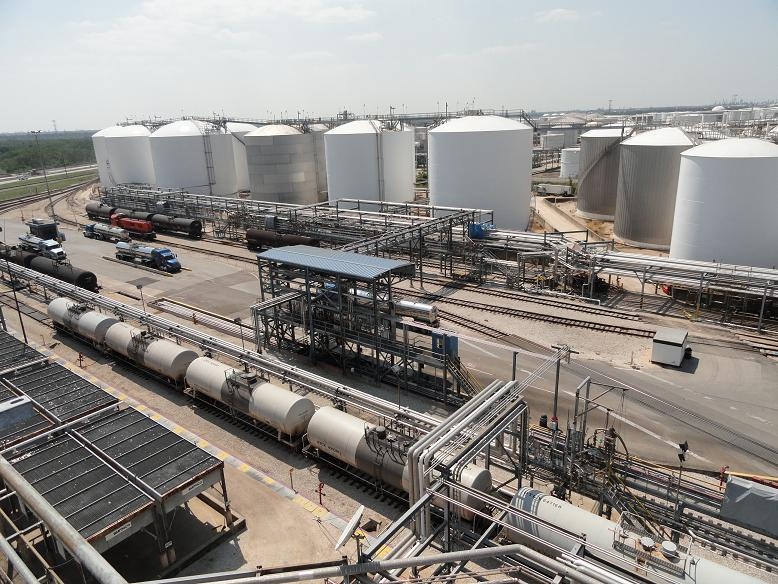
Delivery capability by railcars augments Ascend’s existing barge services for distributing acrylonitrile.
Ascend Performance Materials today announced it has developed new railcar, tanker truck and ISO container loading facilities for deliveries of acrylonitrile in North America.
This new capability for loading and delivery of acrylonitrile by railcar, tanker truck and ISO container throughout North America complements Ascend’s previously existing barge and ship (export) delivery capability. Ascend is proceeding now with customer trials and deliveries throughout North America.
“Ascend already operates the largest acrylonitrile production plant in the world at our Chocolate Bayou facility near Alvin, Texas, and this new capability demonstrates Ascend’s strategic commitment to our North American acrylonitrile customers,” said Thomas Verghese, Ph.D., president of the Chemicals business at Ascend Performance Materials.
“The development of this new capability for delivery of significant quantities of our product by railcar, tanker truck and ISO container is a key milestone in Ascend’s strategy to grow our presence in the North American acrylonitrile market,” added Verghese.
SOURCE Ascend.com
DATE: 2015-03-03
Lukoil is in plans to shut an acrylonitrile (ACN) plant for maintenance turnaround.
A Polymerupdate source in Russia informed that the company’s ACN unit is likely to be shut for maintenance turnaround in early April 2015. It is planned to remain off-stream for around two weeks.
Located at Saratov in southern Russia, the plant has a production capacity of 150,000 mt/yr.
SOURCE PolymerUpdate
DATE : 2015-02-03
CNOOC and Shell Petrochemicals Company Limited (CSPC) is in plans to shut a styrene monomer (SM) plant for maintenance turnaround.
A Polymerupdate source in China informed that the plant is likely to be shut in Q4, 2015. It is likely to remain off-stream for around 40 days.
Located at Nanhai in China, the plant has a production capacity of 700,000 mt/year.
SOURCE PolymerUpdate
SPECIAL REPORT: ACRYLIC ACID
Amid falling petrochemical prices led by lower crude oil prices, BASF has decided to abandon its collaboration
on bio-acrylic acid development with Novozymes and Cargill stating in a private interview that the company’s
global Hygiene business unit could not reach its overall targets for commercialising a dextrose-based product
and that the company does not view investment in scale-up as a viable option at this time.
BASF said it had decided to end the collaboration by the end of November after considering multiple
factors in taking the decision. The company did recognise that the collaboration was able to successfully
convert 3-hydroxypropionic acid (3-HP) into bio-based acrylic acid.
Novozymes announced last month BASF’s decision to leave the project. Novozymes and Cargill will
continue to commercialise the technology and said that they have now initiated efforts to find a new
commercialisation partner. Novozymes and Cargill have been working on the project since 2008
and BASF joined the collaboration in 2012. In September last year, the companies reported milestone
achievements in the successful conversion of 3-HP to bio-based glacial acrylic acid and superabsorbent
polymers (SAPs) at pilot scale. The partners have demonstrated the production of 3-HP from dextrose at
pilot scale since July 2013.
Novozymes recently noted in a private interview that the company was baffled by BASF’s decision to leave
the project despite the milestone. Novozymes said it had been also in doubt in the first couple of years
whether the technology is economical but after last year, it is confident that the project will be able to push
through to the next commercialisation phase, despite the setback of BASF’s departure from the partnership.
However, it will not be easy to find a partner as big as BASF in the acrylic acid demand space. BASF
is a large producer of petro-based acrylic acid but much of it is for captive use in the production and
downstream processing of acrylic acid-based derivatives including SAPs and acrylates. Below are the
world’s top acrylic acid producers in the marketplace:
World Top Acrylic Acid Producers 2014
Company Location Capacity (ktpa)
BASF Various 1245
Jiangsu Jurong China 605
Arkema US & France 545
Dow Chemical US 520
Nippon Shokubai Japan 520
StoHass US & Germany 430
Formosa Plastic Corporation Taiwan & China 400
Zhejiang Satellite China 375
LG Chem South Korea 353
Source: Tecnon OrbiChem
The global acrylic acid market is estimated almost 5 million tons in 2014. Bulk acrylates account for
the biggest use of acrylic acid with about 45% of total consumption. The second largest use is in SAPs,
accounting for about 37% of consumption. The trend to higher add-on amounts for SAP to diapers in an
effort to reduce fluff pulp content continues to support demand via glacial acrylic acid use.
All commercially produced acrylic acid currently uses propylene feedstock. Four years ago, the projections were
that propylene would be in short supply because of the increase in shale gas use, which leads to less production
of propylene compared to naphtha cracking. It now appears that the increase in global investments for onpurpose
propane dehydrogenation (PDH) plants and other process technologies producing propylene have
changed the projected supply dynamics for propylene and in turn for acrylic acid.
BASF itself has announced planned investments last year for a global-scale methanol-to-propylene (MTP)
plant in the US using methanol from natural gas. MTP is projected to have the lowest cash costs of
production of propylene compared to naphtha crackers and PDH. In China, coal-to-olefins technology is
being used to partly satisfy the domestic demand for propylene.
There are very few developers that are near the commercialisation stage in the bio-acrylic acid space
aside from the Novozymes/Cargill collaboration. OPX Biotechnologies has partnered with Dow Chemical
for the production of acrylic acid using glycerol for feedstock. The companies have been both quiet on
the progress of their collaboration but it was heard that OPX Bio is looking to build a plant in Southeast
Asia pending financing. Glycerine is plentiful in Southeast Asia as it is a co-product in the production of
oleochemicals as well as in biodiesel and soap manufacture. The Malaysian oleochemical and palm
industries, in particular, are looking for more lucrative downstream products using palm oil feedstock. Dow
Chemical, on the other hand, is also building a PDH plant in Freeport, Texas, that is expected to come
online this year.
Major acrylic acid players, Arkema and Nippon Shokubai, have also been looking to produce bio-acrylic
acid from glycerine but there had been no news of further advancements in their projects after reported
success at the pilot scale.
Novomer is pursuing a different route to acrylic acid by using their proprietary catalysts to produce
polypropiolactone from ethylene oxide and carbon monoxide. Polypropiolactone can then be converted
to glacial acrylic acid via pyrolysis. The ethylene oxide can either be bio-based or petro-based depending
on its current economics. Novomer has been planning to run a 5 ktpa pilot plant for producing acrylic
acid this year.
It was reported that Evonik, through its Creavis business, has also developed a catalyst that promotes the
reaction of CO2 with ethylene to make an acrylic acid ester in a one-step process. Reaction conditions are
said to be milder than BASF’s similar process, which is two-stage to make acrylic acid. This development
is still at laboratory stage.
Archer Daniels Midland (ADM) also has a pilot plant that can produce acrylic acid using glycerine.
The company has not announced any plans to further commercialise its technology. ADM is already
commercialising starch-based SAPs as an alternative to polyacrylate-based SAPs. The company partnered
with CIC Holdings and Chemanex in 2013 for a joint venture to build and operate bio-based SAPs
production facility near Colombo, Sri Lanka. ADM will be the majority owner of the venture and will market
the bioSAP™-brand superabsorbents.
It is not known if ADM’s BioSAP is 100% renewable-based or a hybrid SAP where polysaccharides are
still copolymerised with acrylic acid or acrylates. However, the company’s Lysorb® polysaccharide-based
polymer, a technology acquired from Canadian company, Lysac, is reportedly 100% renewable-based.
Consumer products company, Seventh Generation, reportedly uses Lysorb® in some of its feminine hygiene
- products.
In an interview with BASF’s Hygiene business unit, representatives noted that the company is evaluating
further opportunities along the entire value chain to improve sustainability development for its customers.
An example is its HySorb® Mass Balance approach SAPs that use 3rd party certified waste and biomassderived
materials such as ISCC-certified bio-naphtha. Mass balance is currently the company’s way of
deriving products from renewable raw materials, with plans to look at long-term solutions such as resources
derived from lignocellulosic.
BASF said it is currently talking with customers in general about the sustainable disposal of diapers but as
of now there are no biodegradable alternatives to polyacrylates although there are niche suppliers for other
biodegradable materials.
Source: Tecnon Bio-Materials and Intermediates Issue 118 February 27 2015
SPECIAL REPORT: Bio Methacrylic Acid
France-based Global Bioenergies has reached the first milestone in its development of bio-based
methacrylic acid (trademarked under BioMA+) using renewable isobutene feedstock. Methacrylic acid
is a key intermediate in the production of methyl methacrylate (MMA). This milestone resulted in the
company unlocking a €1.7 million payment from the French Investissements d’Avenir State program. The
French State had granted a €5.2 million financing to a consortium that included Global Bioenergies,
Arkema and CNRS. The objective was to develop and demonstrate at pilot scale a complete process of
producing isobutene from a renewable resources and converting isobutene into methacrylic acid.
Global Bioenergies started up an industrial pilot plant in November 2014 on the agro-industrial site of
Pomacle-Bazancourt where BioAmber used to have its bio-succinic acid tolling facility. ARD, a subsidiary
of the sugar refiner, Cristal Union, is in charge of the pilot’s operation, and now carries out on a weekly
basis, fermentation trials mimicking the exploitation of bio-isobutene to MA at full-scale.
Global Bioenergies has been able to produce more isobutene in the last three months than over the past
five years. The company said the oil price meltdown does not affect its fundamentals in the short or medium
term because of the expectation that the oil market’s equilibrium will be back before its commercialisation
of bio-isobutene process, which is projected to begin in the 2017-18 time frame. The isobutene process is
said to be competitive with crude oil at $50/bbl in specific markets.
There are other companies currently developing either bio-based MA or its ester derivative, methyl
- methacrylate. Petro-based MA is currently produced via three routes: either by the acetone cyanohydrin
route; using the isobutylene feedstock route; or via a isobutyric acid route, which can be dehydrogenated
to MA. Methacrolein can also be obtained from formaldehyde and ethylene.
Mitsubishi Rayon (MRC), through its subsidiary Lucite International, has been developing several bio-based
MMA routes either by using biomass for feedstock in the existing production processes, or using a novel
one-step fermentation route to produce bio-MMA. According to Lucite, all of its major raw materials can
be potentially sourced from bio-feedstocks such as acetone from the ABE fermentation process; bioethanol
can be converted into bio-ethylene; or bio-methanol can be made from biogas or from the gasification of
domestic waste.
Lucite is currently working with a number of companies to investigate the feasibility of bio-acetone production
as well as to evaluate the introduction of bio-methanol and bio-ethylene into its MMA manufacturing
- operations. Its Alpha Technology enables the company to use ethylene, methanol and carbon monoxide
for MMA feedstock. Lucite has been running its Alpha Technology at a commercial scale since 2008 with
a 100 ktpa petro-MMA plant in Singapore.
Lucite said its bio-based MMA project is ongoing as the company addresses many technological challenges
in designing complex new biochemical routes. The fermentation process must be able to deliver high
concentrations of the product at acceptable output rates and at an economical level. The company noted
that customers’ attitudes towards lowering their environmental footprint, especially in the coatings industry
is a positive note towards further development of plant-based MMA.
Specialty chemicals company, Evonik, through its Creavis business unit, is also working on bio-based
MMA using a fermentation process that can convert syngas to pure 2-hydoxyisobutyric acid (2-HIBA).
Evonik has partnered with LanzaTech for its gas fermentation expertise. Evonik is already offering in the
market its VISIOMER® Terra methacrylate monomers partially based on bio-renewable raw materials.
The VISIOMER® Terra IBOMA uses a main raw material, camphene, produced from pine tree resin. The
product enables formulation of paint resins with a lower VOC content, and reduces resin viscosity.
Evonik’s VISIOMER® Terra C13-MA and VISIOMER® Terra C17.4 MA are based on natural oils and
are typically used to increase the hydrophobicity of resins. The products improve water repellency and
resistance to polar solvents.
Source: Tecnon Bio-Materials and Intermediates Issue 118 February 27 2015
General description a the new Camacari Acrylic Acid complex in Brazil