
Issue
The Mobility solution streamlines logistics and warehouse execution by providing automatic real-time data capture and updates, and facilitates the effective and efficient processing of the inbound, outbound and internal goods movements. Therefore, Syensqo has implemented Neptune-based Mobility Solution (In short, Neptune Solution), which is a set of mobile applications developed based on Neptune platform integrating with SAP ECC backend programs.
- As transitioning into SAP S/4HANA, it is a good opportunity to review and optimize the current highly customized Neptune solution, and also assess some other options to implement a standard, simplified and future proof mobile solution across Syensqo.
- As part of current Neptune Solution, different apps with similar functionalities were developed for 2 SAP instances (WP1 and PF1) used in Syensqo. Consolidation of functionalities is reasonable moving forward to SAP S/4HANA.
- KDD014 - Future-proof Warehouse Operations describes that as part of the transition into SAP S/4HANA, the SAP WM module is obsolete. Also for that reason, the current mobility solution should be reviewed.
Recommendation
The recommendation is to use Future Neptune-based Solution, which offers both online and offline capabilities to ensure users can perform daily tasks seamlesslycontinuously even during network disruptions. The Future Neptune Solution also provides warehouse users tailored apps with unified view of both logistics and warehouse management functionalities. Furthermore, change management is limited since the users are familiar with the Neptune App navigations.
However, it’s still worth exploring apps prebuilt by third-party vendors later during detailed design. This might discover a valuable solution without the complexity of building from scratchDepending on the future process design, the decision will be made later in detailed design phase whether to develop highly customised applications in-house or utilize the third-party vendor pre-built applications with reasonable enhancements.
Background & Context
Neptune is a Norwegian company that sells and distributes whose Neptune platform is used to design and deploy mobile applications which can interface with SAP applications. In Syensqo the Nereid project rolled out the Neptune-based mobility solution across the organizationto selected plants and warehouses.
Syensqo Neptune Solution, 's Nereid solution, sitting on Neptune DX Platform Planet 8 moduleSAP Edition, includes a set of business tailored applications which support and manage on the site logistics and warehouse management operations.
Some examples of apps in Syensqo's Neptune Apps solution are:
- Goods Receipt for purchase order
- Putaway in Warehouse Management
- Pick and Load
- Pallet / SU (Storage Unit) Creation
- PP-PI, PP-REM Material Consumption
- Inventory Counting for IM (Inventory Management) and WM (Warehouse Management)
- IM/WM Location Moves
- Bin to Bin Movement
- Label Printing etc.
Assumptions
- The current Neptune solution covers functionalities of Logistics, Warehouse Management (WM) and Plant Maintenance (PM). The Plant Maintenance Functionalities are covered in the EAM - Mobility Solution KDD and not further discussed in this document.
- The business requirements for mobile functionalities are expected to be refined further during the detailed design phase.
- Language requirements for the mobile applications are covered in a separate KDD in detailed design.
- This document assumes the recommendation of of KDD014 (- Future-Proof proof Warehouse Operations) is followed in the future design meaning EWM will be implemented.
- For sites to be rolled out the mobility solution, the scale of required hardware and infrastructure will be assessed during the detailed design phase.
- For sites already have current mobility solution implemented, the existing hardware and infrastructure will be reviewed during the detailed design phase to ensure meet the requirements of the future Neptune-based solution.
- It is assumed that the third-party Neptune partner solution is augmented, which can be expanded and enhanced to fit in the Syensqo specific business requirements.
Constraints
By understanding the below challenges, we can mitigate risks and optimize the Neptune-based mobile solution to meet the Syensqo specific needs.
User Experience (UX) in Mobile Context: Although Neptune allows for custom UX design, which can lead to a highly tailored user experience, however, inconsistencies or complex functionalities may impact user adoption and productivity. So to ensure the intuitive and efficient workflows that align with business processes, the UX design should focus on minimizing user inputs, utilizing device features such as barcode scanning, and providing clear navigation paths.
Mobile App Lifecycle Management: Neptune solution is not an one-off implementation, but requires Syensqo requires Syensqo to manage the mobile application lifecycle and ensure the mobility solution is compatible with evolving SAP releases, operating system updates, and device changes. This may involve continuous software update and version management etc., which requires proactive planning and regular maintenance.
Vendor Support and Roadmap: Dependency on Neptune as a third-party solution provider necessitates understanding their support policies, product roadmap, and future compatibility with SAP updates. Regular communication with Neptune regarding updates, patches, and new features is essential to stay current and leverage enhancements.
Impacts
Process and Functionalities: Although the future Future Neptune Solution can leverage the current designs and features, SAP S/4HANA will introduce changes in the processes, functionalities, as well as role definition and authorizations, therefore the future solution will start from the To-Be design requirements, review the current mobile functionalities will need to be reviewed to align with the ERP Rebuild solution designs, assess the usability of prebuild Neptune-based apps and decide whether to build new or enhance the pre-build applications.
User Training and Change Management: Users familiar with ECC-based processes will need training on new processes and features introduced in S/4HANA, which ensures smooth adoption of the new Neptune Solutionsolution. Sufficient and qualitative end user training across all relevant plants and warehouses is required for a successful implementation.
Data Mapping and Conversion: Data structures and data models in S/4HANA differ from the ones in ECC. The new Future Neptune Solution must accommodate these changes and ensure data integrity.
Licensing and Cost Implications: Extra licensing costs will be incurred to roll-out the mobility solution to those sites which don't have Neptune Solution implemented currently.
Implementation Resources: Additional resources will be needed to implement the mobility solution as part of S/4HANA project. Especially if Syensqo chooses to develop highly customized applications in-house, significant resources will be required, including extra technical, testing, training and change management resources etc. This will have financial impact on project budget.
Business Rules
- Potentially, the The selected mobility future solution should be implemented where the current mobility solution is already in place. To rolled out to all the Syensqo Manufacturing Plants, DCs (Distribution Centers) which are operated and managed by Syensqo, R&I Centers and Spare part warehouses. other relevant Syensqo sites, the cost-benefit should also be evaluated during the detailed design phase, while considering site-specific conditions/hardware regulations such as explosion and flammability risks. Defined processes and further updates will be determined during the detailed design phase.
- Warehouses Syensqo sites to be implemented of Mobility Solution will Solution will have sufficient mobile devices to support the execution of the daily operations and exceptions.
Options
consideredConsidered
Option A: SAP Standard Mobile Solution
From logistics perspective,SAP offers
thetwo standard options covering different aspects of Logistics Executions:
SAP Inventory Manager
:, covering Logistics
SAP Inventory Manager
is a complete wireless inventory management solution. It provides the company with the tools to improve and manage inventory levels, efficiently fill customer orders, and track the movement of materials using mobile devices with scanning functionality. The mobile application accesses the SAP Enterprise Asset Management (EAM) solution and provide the technicians and warehouse staff with the ability to execute stockroom operations in an automated and seamless way.
Inventory Manager can be deployed on a wide range of mobile devices, such as phone, tablet and windows mobile devices. It
supports19supports 19 different languages. Refer to List of Languages Supported by SAP Inventory Manager
inbelow
section See also.
From Warehouse Management perspective, SAP EWM is offering an extended RF framework.Extended RF Framework from EWM, covering Warehouse Management
It enables various warehouse activities, such as picking, putting away, packing, counting, and more, to be managed efficiently and accurately. Screen personas can be used to adapt the screens with greater flexibility and limited complexity.
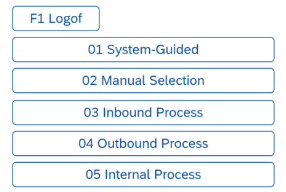
This is an example of the basic RF menu to display for the warehouse operators.
These menus are easily adjustable on warehouse operator level. However the underlying technology is quite old and does not produce complex or user-friendly UIs.
Option B: Future Neptune-based Solution
Utilize the intuitive and customizable UI/ UX in Neptune platform to design, build, deploy and maintain mobile apps integrating , offline data sync capabilities, and close integration with SAP S/4HANA , provided by the Neptune platform to meet Syensqo's logistics and warehouse management business requirements. This future Neptune Solution will be built with leveraging the current mobile functionalities with the below principles: The Neptune platform has been proven through existing Syensqo deployments (e.g. Nereid), as well as past experience in different clients. Importantly, several out-of-the-box options exist for apps providing functionality in the logistics and warehouse management domains providing surety that Syensqo will be able to deploy a fit-for-purpose solution using one of two approaches utilizing this platform:
- Adopt, and if required extend with custom functions, an out-of-the-box solution provided by third-party Neptune partner (e.g. PreBilt, HRC); or
- Develop a fully-custom mobile app tailored to Syensqo's processes and needs in-house, by leveraging pre-developed components, modules and libraries provided as part of the Neptune platform.
The exact choice of approach will be finalised during Detailed Design through in-depth analysis of both the requirements and available commercial options using the principles listed below. Such an analysis is beyond the scope of Conceptual Design.
- Functional Requirements: Meets all essential and applicable functionalities in both online and offline/occasionally-disconnected environments.
- Technical alignment with S/4HANA for seamless synchronization.
- User Experience (UX): Aligns with Fiori UX and ease of use by logistics and warehouse personnel (e.g. single sign-on)
- Unified View: Provides a consistent entry for warehouse operations even if use using different SAP functionalities.
Option C
: Third-party Vendor SolutionThere are other mobile solutions can be considered, which are prebuilt by third-party vendors and specialized in enterprise mobility. They can integrate with SAP S/4HANA, and often provide rapid development capabilities with pre-built templates and connectors. Offer additional features such as analytics, workflow management, and offline capabilities. However, cost of licenses, maintenance, and support will need to be thoroughly assessed. Also need to ensure compatibility and adherence to SAP standards for integration and security.
The examples for third party solutions are:
- PreBiltTM SAP supply chain mobility solution from The Config Team (Prebilt)
- HRC procurement and warehouse solution from HRC Software
: SAP Mobile Design Solution
Based on business requirements, Syensqo can also utilize SAP Fiori or Mobile Services to build customized applications with leveraging the current functionalities.
- SAP Fiori Apps: SAP Fiori is SAP's user experience (UX) design system that provides a set of applications that can be used on desktops, tablets, and mobile devices. It offers a consistent and intuitive user experience following SAP's design principles. Covers a wide range of logistics and warehouse processes. However, it will need customization for specific business processes beyond standard SAP functionality.
- SAP BTP Mobile Services: Formerly known as SAP Mobile Platform (SMP), provides Provides a framework and tools for developing, deploying, and managing mobile applications that integrate with SAP systems. It offers flexibility to build tailored mobile solutions for specific business requirements, supports offline capabilities and integrates with device management solutions. However, it this approach requires development effort and expertise, may have cost implications for licensing and development, and would rely on a technology stack that is relatively unproven and subject to SAP's frequent historical changes in direction.
Evaluation
Based on five different criteria, the the matrix below compares the pros and cons of the potential options for logistics & warehouse management mobility solution.
Option A: SAP Standard Mobile Solution | Option B: Future Neptune-Based Solution | Option C: |
|---|
SAP Mobile Design Solution | |
|---|---|
| Functional Fit |
|
specifically designed for enterprise asset management (EAM) processes. |
Require additional customization |
|
 A
A Can leverage the current Neptune functionalities and design.
|
during detail design to make sure the pre-build applications align with business requirements. |
|
| Integration with SAP |
|
-capable solution provided natively by the S/4HANA system without add-ons. |
Although it can be tightly integrated with SAP, it is not as seamless integration as the standard SAP solutions. Integration with S/4HANA is mandatory. This depends on the solution used by the vendor. More detailed assessment is required to ensure the integration.
 Native SAP mobile solution, which seamlessly integrates with SAP S/4HANA.
|
|
|
| Usability |
|
Provides real-time access to SAP data.
|
In EWM extended RF framework environment, users won't be able to continue transactions in mobile devices during disconnection or limited access to network. |
|
Users will be able to continue transactions in mobile devices during disconnection or limited access to network. |
|
Provides Provides real-time access to SAP data.
|
users won't be able to continue mobile transactions during disconnection or limited access to network. | |
| Offline Capabilities | |
| In EWM extended RF framework environment, no offline capabilities to support operations in a remote area without network if required. | Offline capabilities can support operations in a remote area without network |
Vendor can be selected based on offline capabilities | if required. | Standard SAP Fiori Apps have no offline capabilities to support operations in a remote area without network if required. |
| Implementing Efforts and Change Management |
|
|

may be required to fit to the future S/4HANA solution design. |
Use of the Neptune platform ensures extensibility without modification of vendor-delivered code.
|
To liaise and work with both SAP and third-party solution provides adds the complexity to implementation and change management.
| Major development efforts are most likely required to fit to |
| Syensqo specific needs. |
As shown in the matrix, the Future Neptune-based Solution provides tailored apps with Syensqo unified view of logistics and warehouse management functionalities. This can better fulfill the specific Syensqo business requirements. With both The online and offline capabilities , this option ensures ensure business operation continuity. However, depending Depending on the level degree of standardization in future processes , it may still worth to further assess the standard functionalities prebuilt by and the expandability of third-party vendors at later stage to avoid the efforts of building the solution from the scratch.solution, Syensqo may choose to build highly customized applications or adopt an out-of-the-box solution after further assessments in detailed design phase.
See also
- List of Languages Supported by SAP Inventory Manager
- ar - Arabic
- cs - Czech
- de - German
- es - Spanish
- fr - French
- he - Hebrew
- hu - Hungarian
- it - Italian
- ja - Japanese
- ko - Korean
- pl - Polish
- pt - Portuguese
- ro - Romanian
- ru - Russian
- sh - Serbian
- sk - Slovakian
- sv - Swedish
- tr - Turkish
- zh-CN - Simplified Chinese
| Attachments | ||||||
|---|---|---|---|---|---|---|
|
Change log
| Change History | ||
|---|---|---|
|
Workflow history
| Workflow Report | ||||||
|---|---|---|---|---|---|---|
|