

I took the opportunity of Evonik Q4 2014-Full year 2014 results presentation to collectsome interesting market information:
MMA, PMMA markets dynamics Q4-2014
Evonik new business segmentation: (MMA-PMMA and Acrylics (including SAP ?) are part of "Specialty Materials" Business Segment
General Market insight about SAP-Baby Diapers
DATE : 2015-03-03
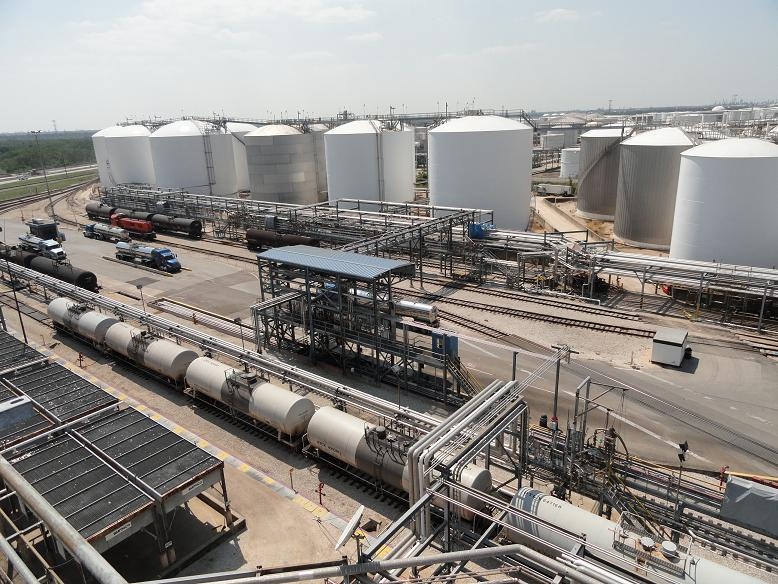
Delivery capability by railcars augments Ascend’s existing barge services for distributing acrylonitrile.
Ascend Performance Materials today announced it has developed new railcar, tanker truck and ISO container loading facilities for deliveries of acrylonitrile in North America.
This new capability for loading and delivery of acrylonitrile by railcar, tanker truck and ISO container throughout North America complements Ascend’s previously existing barge and ship (export) delivery capability. Ascend is proceeding now with customer trials and deliveries throughout North America.
“Ascend already operates the largest acrylonitrile production plant in the world at our Chocolate Bayou facility near Alvin, Texas, and this new capability demonstrates Ascend’s strategic commitment to our North American acrylonitrile customers,” said Thomas Verghese, Ph.D., president of the Chemicals business at Ascend Performance Materials.
“The development of this new capability for delivery of significant quantities of our product by railcar, tanker truck and ISO container is a key milestone in Ascend’s strategy to grow our presence in the North American acrylonitrile market,” added Verghese.
SOURCE Ascend.com
DATE: 2015-03-03
Lukoil is in plans to shut an acrylonitrile (ACN) plant for maintenance turnaround.
A Polymerupdate source in Russia informed that the company’s ACN unit is likely to be shut for maintenance turnaround in early April 2015. It is planned to remain off-stream for around two weeks.
Located at Saratov in southern Russia, the plant has a production capacity of 150,000 mt/yr.
SOURCE PolymerUpdate
DATE : 2015-02-03
CNOOC and Shell Petrochemicals Company Limited (CSPC) is in plans to shut a styrene monomer (SM) plant for maintenance turnaround.
A Polymerupdate source in China informed that the plant is likely to be shut in Q4, 2015. It is likely to remain off-stream for around 40 days.
Located at Nanhai in China, the plant has a production capacity of 700,000 mt/year.
SOURCE PolymerUpdate
General description a the new Camacari Acrylic Acid complex in Brazil
Attachment(s)
SPECIAL REPORT: ACRYLIC ACID
Amid falling petrochemical prices led by lower crude oil prices, BASF has decided to abandon its collaboration
on bio-acrylic acid development with Novozymes and Cargill stating in a private interview that the company’s
global Hygiene business unit could not reach its overall targets for commercialising a dextrose-based product
and that the company does not view investment in scale-up as a viable option at this time.
BASF said it had decided to end the collaboration by the end of November after considering multiple
factors in taking the decision. The company did recognise that the collaboration was able to successfully
convert 3-hydroxypropionic acid (3-HP) into bio-based acrylic acid.
Novozymes announced last month BASF’s decision to leave the project. Novozymes and Cargill will
continue to commercialise the technology and said that they have now initiated efforts to find a new
commercialisation partner. Novozymes and Cargill have been working on the project since 2008
and BASF joined the collaboration in 2012. In September last year, the companies reported milestone
achievements in the successful conversion of 3-HP to bio-based glacial acrylic acid and superabsorbent
polymers (SAPs) at pilot scale. The partners have demonstrated the production of 3-HP from dextrose at
pilot scale since July 2013.
Novozymes recently noted in a private interview that the company was baffled by BASF’s decision to leave
the project despite the milestone. Novozymes said it had been also in doubt in the first couple of years
whether the technology is economical but after last year, it is confident that the project will be able to push
through to the next commercialisation phase, despite the setback of BASF’s departure from the partnership.
However, it will not be easy to find a partner as big as BASF in the acrylic acid demand space. BASF
is a large producer of petro-based acrylic acid but much of it is for captive use in the production and
downstream processing of acrylic acid-based derivatives including SAPs and acrylates. Below are the
world’s top acrylic acid producers in the marketplace:
World Top Acrylic Acid Producers 2014
Company Location Capacity (ktpa)
BASF Various 1245
Jiangsu Jurong China 605
Arkema US & France 545
Dow Chemical US 520
Nippon Shokubai Japan 520
StoHass US & Germany 430
Formosa Plastic Corporation Taiwan & China 400
Zhejiang Satellite China 375
LG Chem South Korea 353
Source: Tecnon OrbiChem
The global acrylic acid market is estimated almost 5 million tons in 2014. Bulk acrylates account for
the biggest use of acrylic acid with about 45% of total consumption. The second largest use is in SAPs,
accounting for about 37% of consumption. The trend to higher add-on amounts for SAP to diapers in an
effort to reduce fluff pulp content continues to support demand via glacial acrylic acid use.
All commercially produced acrylic acid currently uses propylene feedstock. Four years ago, the projections were
that propylene would be in short supply because of the increase in shale gas use, which leads to less production
of propylene compared to naphtha cracking. It now appears that the increase in global investments for onpurpose
propane dehydrogenation (PDH) plants and other process technologies producing propylene have
changed the projected supply dynamics for propylene and in turn for acrylic acid.
BASF itself has announced planned investments last year for a global-scale methanol-to-propylene (MTP)
plant in the US using methanol from natural gas. MTP is projected to have the lowest cash costs of
production of propylene compared to naphtha crackers and PDH. In China, coal-to-olefins technology is
being used to partly satisfy the domestic demand for propylene.
There are very few developers that are near the commercialisation stage in the bio-acrylic acid space
aside from the Novozymes/Cargill collaboration. OPX Biotechnologies has partnered with Dow Chemical
for the production of acrylic acid using glycerol for feedstock. The companies have been both quiet on
the progress of their collaboration but it was heard that OPX Bio is looking to build a plant in Southeast
Asia pending financing. Glycerine is plentiful in Southeast Asia as it is a co-product in the production of
oleochemicals as well as in biodiesel and soap manufacture. The Malaysian oleochemical and palm
industries, in particular, are looking for more lucrative downstream products using palm oil feedstock. Dow
Chemical, on the other hand, is also building a PDH plant in Freeport, Texas, that is expected to come
online this year.
Major acrylic acid players, Arkema and Nippon Shokubai, have also been looking to produce bio-acrylic
acid from glycerine but there had been no news of further advancements in their projects after reported
success at the pilot scale.
Novomer is pursuing a different route to acrylic acid by using their proprietary catalysts to produce
polypropiolactone from ethylene oxide and carbon monoxide. Polypropiolactone can then be converted
to glacial acrylic acid via pyrolysis. The ethylene oxide can either be bio-based or petro-based depending
on its current economics. Novomer has been planning to run a 5 ktpa pilot plant for producing acrylic
acid this year.
It was reported that Evonik, through its Creavis business, has also developed a catalyst that promotes the
reaction of CO2 with ethylene to make an acrylic acid ester in a one-step process. Reaction conditions are
said to be milder than BASF’s similar process, which is two-stage to make acrylic acid. This development
is still at laboratory stage.
Archer Daniels Midland (ADM) also has a pilot plant that can produce acrylic acid using glycerine.
The company has not announced any plans to further commercialise its technology. ADM is already
commercialising starch-based SAPs as an alternative to polyacrylate-based SAPs. The company partnered
with CIC Holdings and Chemanex in 2013 for a joint venture to build and operate bio-based SAPs
production facility near Colombo, Sri Lanka. ADM will be the majority owner of the venture and will market
the bioSAP™-brand superabsorbents.
It is not known if ADM’s BioSAP is 100% renewable-based or a hybrid SAP where polysaccharides are
still copolymerised with acrylic acid or acrylates. However, the company’s Lysorb® polysaccharide-based
polymer, a technology acquired from Canadian company, Lysac, is reportedly 100% renewable-based.
Consumer products company, Seventh Generation, reportedly uses Lysorb® in some of its feminine hygiene
- products.
In an interview with BASF’s Hygiene business unit, representatives noted that the company is evaluating
further opportunities along the entire value chain to improve sustainability development for its customers.
An example is its HySorb® Mass Balance approach SAPs that use 3rd party certified waste and biomassderived
materials such as ISCC-certified bio-naphtha. Mass balance is currently the company’s way of
deriving products from renewable raw materials, with plans to look at long-term solutions such as resources
derived from lignocellulosic.
BASF said it is currently talking with customers in general about the sustainable disposal of diapers but as
of now there are no biodegradable alternatives to polyacrylates although there are niche suppliers for other
biodegradable materials.
Source: Tecnon Bio-Materials and Intermediates Issue 118 February 27 2015
SPECIAL REPORT: Bio Methacrylic Acid
France-based Global Bioenergies has reached the first milestone in its development of bio-based
methacrylic acid (trademarked under BioMA+) using renewable isobutene feedstock. Methacrylic acid
is a key intermediate in the production of methyl methacrylate (MMA). This milestone resulted in the
company unlocking a €1.7 million payment from the French Investissements d’Avenir State program. The
French State had granted a €5.2 million financing to a consortium that included Global Bioenergies,
Arkema and CNRS. The objective was to develop and demonstrate at pilot scale a complete process of
producing isobutene from a renewable resources and converting isobutene into methacrylic acid.
Global Bioenergies started up an industrial pilot plant in November 2014 on the agro-industrial site of
Pomacle-Bazancourt where BioAmber used to have its bio-succinic acid tolling facility. ARD, a subsidiary
of the sugar refiner, Cristal Union, is in charge of the pilot’s operation, and now carries out on a weekly
basis, fermentation trials mimicking the exploitation of bio-isobutene to MA at full-scale.
Global Bioenergies has been able to produce more isobutene in the last three months than over the past
five years. The company said the oil price meltdown does not affect its fundamentals in the short or medium
term because of the expectation that the oil market’s equilibrium will be back before its commercialisation
of bio-isobutene process, which is projected to begin in the 2017-18 time frame. The isobutene process is
said to be competitive with crude oil at $50/bbl in specific markets.
There are other companies currently developing either bio-based MA or its ester derivative, methyl
- methacrylate. Petro-based MA is currently produced via three routes: either by the acetone cyanohydrin
route; using the isobutylene feedstock route; or via a isobutyric acid route, which can be dehydrogenated
to MA. Methacrolein can also be obtained from formaldehyde and ethylene.
Mitsubishi Rayon (MRC), through its subsidiary Lucite International, has been developing several bio-based
MMA routes either by using biomass for feedstock in the existing production processes, or using a novel
one-step fermentation route to produce bio-MMA. According to Lucite, all of its major raw materials can
be potentially sourced from bio-feedstocks such as acetone from the ABE fermentation process; bioethanol
can be converted into bio-ethylene; or bio-methanol can be made from biogas or from the gasification of
domestic waste.
Lucite is currently working with a number of companies to investigate the feasibility of bio-acetone production
as well as to evaluate the introduction of bio-methanol and bio-ethylene into its MMA manufacturing
- operations. Its Alpha Technology enables the company to use ethylene, methanol and carbon monoxide
for MMA feedstock. Lucite has been running its Alpha Technology at a commercial scale since 2008 with
a 100 ktpa petro-MMA plant in Singapore.
Lucite said its bio-based MMA project is ongoing as the company addresses many technological challenges
in designing complex new biochemical routes. The fermentation process must be able to deliver high
concentrations of the product at acceptable output rates and at an economical level. The company noted
that customers’ attitudes towards lowering their environmental footprint, especially in the coatings industry
is a positive note towards further development of plant-based MMA.
Specialty chemicals company, Evonik, through its Creavis business unit, is also working on bio-based
MMA using a fermentation process that can convert syngas to pure 2-hydoxyisobutyric acid (2-HIBA).
Evonik has partnered with LanzaTech for its gas fermentation expertise. Evonik is already offering in the
market its VISIOMER® Terra methacrylate monomers partially based on bio-renewable raw materials.
The VISIOMER® Terra IBOMA uses a main raw material, camphene, produced from pine tree resin. The
product enables formulation of paint resins with a lower VOC content, and reduces resin viscosity.
Evonik’s VISIOMER® Terra C13-MA and VISIOMER® Terra C17.4 MA are based on natural oils and
are typically used to increase the hydrophobicity of resins. The products improve water repellency and
resistance to polar solvents.
Source: Tecnon Bio-Materials and Intermediates Issue 118 February 27 2015
DATE : 2015-02-27
South Korea's Taekwang Industrial shut its 290,000 tonne/year acrylonitrile (ACN) plant on 25 February for scheduled maintenance, a company source said on Friday.
“The plant was shut down 25 February on schedule, and it will be restarted around 16 March,” the source said.
The plant is located in Ulsan, South Korea.
SOURCE Icis News
DATE : 2015-02-27
Japan’s Nippon Steel Chemical on 21 February restarted its 230,000 tonne/year No 3 styrene monomer (SM) unit at Oita after a scheduled maintenance, a company source said.
The unit was shut on 18 January.
The company operates another 190,000 tonne/year No2 SM unit at the same location. This unit is scheduled for maintenance from 25 March to 13 April.
Other SM producers in Japan included Idemtisu Kosan Co, Asahi Kasei Chemical and Taiyo Petrochemical.
SOURCE Icis News
DATE : 2015-02-24
Solvay wants to expand its capacity of specialty polymers once again and builds a new plant in the USA to produce polyether etherketone. In India is the expansion of the production capacity already in progress.
Solvay recognises a growing demand for the specialty polymers polyether etherketone (PEEK) and polyaryl ether ketone (PAEK) and continues thus its expansion drive. The new unit at Solvay’s Specialty Polymers site in Augusta, Georgia, is expected to come on stream in mid-2016.
Combined with the expansion already underway at the site in Panoli, India, raise Solvay’s total PEEK neat resin production capacity to more than 2,500 Metric Tons worldwide. Collectively, Solvay will invest more than $85 million in these two expansions.
Secured Neat Resin Supply
The new unit will be located alongside Solvay Specialty Polymers’ existing resin and monomer production units in Augusta, and benefit from the site's proximity to the GBU’s Research & Innovation center in Alpharetta, Georgia. The new PEEK unit will use the same processes and technologies as Solvay’s well-proven and highly reliable Panoli plant. These two specialty polymers play a major role in light-weighting, reducing energy consumption and in enabling high performance in demanding applications such as healthcare, electronics, oil & gas, aeronautics and automotive.
“This major expansion drive will make Solvay the only player in the industry to produce PEEK at two different sites in two different, growing regions,” said Augusto Di Donfrancesco, President of Solvay’s Specialty Polymers Global Business Unit (GBU). “The new plant in the United States together with the one in India will provide unmatched security of neat resin supply. These investments reinforce our long-term commitment to our customers worldwide.”
“This major expansion drive will make Solvay the only player in the industry to produce PEEK at two different sites in two different, growing regions,” said Augusto Di Donfrancesco, President of Solvay’s Specialty Polymers Global Business Unit (GBU).
SOURCE Process Worldwide Online
DATE : 2015-02-24
The new company will provide cathode active materials (CAM) for lithium-ion batteries in Japan.
BASF TODA Battery Materials was established with 66% equity from BASF Japan Ltd. and 34% from TODA KOGYO CORP. The joint venture will conduct research and development, production, marketing and sales for a broad range of cathode materials, particularly NCA (Nickel Cobalt Aluminum Oxide), LMO (Lithium Manganese Oxide) and NCM (Nickel Cobalt Manganese) in Japan. These materials are used in lithium-ion batteries for the automotive, consumer electronics, and stationary storage markets. Internationally, the company will leverage BASF’s global network and reach to drive growth in the battery materials market, which BASF has identified as a key growth field for the future.
Kenneth Lane, President of BASF’s Catalysts division, said,“BASF brings global strength in cathode active materials to this new venture, together with a 150-year history of innovation. We look forward to developing the business in Japan, which is a global leader in lithium-ion battery manufacturing and innovation.”
Shigeru Takaragi, President of TODA KOGYO CORP., added,“With the formation of this joint venture we are ready to respond in a flexible and timely manner to the globally expanding cathode materials market for lithium-ion batteries. BASF and TODA will combine and mobilize resources to take full advantage of our synergies so that we can provide more innovative solutions to meet customer needs and demands.”
Yasuo Anno, who most recently served as Associate Senior Corporate Executive Officer, TODA KOGYO CORP., and President of Toda Energy Materials, has been appointed Chief Executive Officer of the new venture.
Headquartered in Minato-ku, Tokyo, BASF TODA Battery Materials has production facilities in Sanyo-Onoda city, Yamaguchi Prefecture, and Kita-Kyushu city, Fukuoka Prefecture, Japan. It has a direct employee base of approximately 80, with annual combined production capacity for cathode active materials and their precursors of approximately 18,000 metric tons.
BASF TODA Battery Materials will operate as part of BASF’s global Battery Materials business. It will benefit from BASF’s position as the leading chemical supplier to the automotive industry as well as from TODA KOGYO CORP.’s marketing and technical capabilities and extensive know-how in the battery materials industry.
About BASF
At BASF (basf.com), we create chemistry and have been doing so for 150 years. Our portfolio ranges from chemicals, plastics, performance products and crop protection products to oil and gas. As the world’s leading chemical company, we combine economic success with environmental protection and social responsibility. Through science and innovation, we enable our customers in nearly every industry to meet the current and future needs of society. Our products and solutions contribute to conserving resources, ensuring nutrition and improving quality of life. We have summed up this contribution in our corporate purpose: We create chemistry for a sustainable future. BASF had sales of about €74 billion in 2013 and over 112,000 employees as of the end of the year.
About TODA KOGYO CORP.
TODA KOGYO CORP. (todakogyo.co.jp) is specialized in the Wet Synthesis Technology of metal oxide, and manufacturing cathode materials for lithium-ion batteries, coloring materials including pigments and toners, magnetic powder materials, ferrite materials and other various magnetic materials. We aim to expand our business globally along with our fundamental line to provide solutions to support society in the aspects of information, environment and energy. TODA KOGYO CORP. had consolidated net sales of about 31.6 billion JPY in the fiscal year 2013, as well as about 932 employees as of March 31, 2013.
SOURCE NewsWire
DATE : 2015-02-23
The worlds biggest defense contractor is showing more interest in the energy business than ever before.
With U.S. spending on defense declining, Lockheed Martin (LMT) is increasingly using its expertise in developing and building jet fighters, warships and satellites to help utilities and industrial customers produce and use energy more efficiently, and protect against cyber-attacks.
Energy is certainly an area of growth for us, Lockheed Martin CEO Marillyn Hewson told reporters at the corporations media day outside Washington. In a relative sense, its not a large business for us, but its a growing business for us. So, well continue to invest in that area.
Lockheed Martins not alone among defense contractors looking to energy for a boost in earnings. Boeing(BA), for example, also provides expertise in electric-grid management and cyber-security, and conducts research in energy storage, as well. But Lockheed Martin has been among the most active lately.
Eight of the 10 largest utilities in the U.S. use Lockheed Martin to help manage their operations, which have become increasingly complex with the emergence of wind and solar power, smart meters and sluggish demand for electricity. Among them is Dominion Resources. Earlier this month, the Virginia-based utility and Lockheed Martin announced a collaboration on technology that would enable remote detection of power outages for faster response.
All told, Lockheed Martins energy-efficiency services are saving its electric and gas utility customers more than 1 million megawatt-hours of electricity and more than 10 million therms of gas, enough energy to power nearly 100,000 homes, according to Hewson.
Thats where were seeing our biggest growth, said Frank Armijo, Lockheed Martins vice president for energy solutions. Weve seen 35% growth over the last five years. We continue to see ourselves as a technology leader, as an integrator. Were helping drive energy reductions.
The defense giants pursuit of innovative energy technologies - some call them disruptive, in a good sense - doesnt stop there. Last year, Lockheed Martin bought the assets of an MIT spinoff, Sun Catalytix, to develop batteries for grid- and commercial-scale storage. Such batteries are considered to be the big breakthrough needed to make solar, wind and other forms of renewable energy reliable around the clock.
With the Sun Catalytix acquisition, Lockheed Martin now has capability in every segment of the energy market - from generation and management to storage and security, Hewson said.
Other, longer-term energy ventures are also underway at Lockheed Martin, including a bid to build a fusion reactor within 10 years and a demonstration project off the coast of China that will leverage differences in ocean temperatures to produce electricity.
The interest in energy at Lockheed Martin isnt sudden; the company has been dabbling in energy technologies like ocean thermal energy and fusion energy for decades.
I think the key is (energy) is a domain where the corporation is really historically comfortable, and thats what really makes a difference, said Dan Heller, vice president for new ventures in Lockheed Martins Missile Systems and Training division. Its not like were jumping into something we havent touched in the last 40 years.
What does Wall Street think of Lockheed Martins energy businesses?
Its probably not going to move the needle, honestly, Christopher DeNicolo, a credit analyst with Standard & Poors Ratings Services, said of the impact of energy on a company with an estimated $45 billion in annual revenue.
But DeNicolo adds, If they think they can do it without much investment, its probably worth it for them. And if theyve already invested in all of that technology, they might as well try to monetize some of it.
SOURCE Mehr News Agency
DATE : 2015-02-23
Siam Styrene Monomer Co Ltd is likely to take off-stream its styrene monomer (SM) plant for maintenance turnaround.
A Polymerupdate source in Thailand informed that the plant is likely to be shut in Q1, 2015. A definite schedule for the shutdown could not be ascertained.
Located at Map Ta Phut in Thailand, the plant has a production capacity of 300,000 mt/year.
SOURCE PolymerUpdate
DATE : 2015-02-20
Kumho Petrochemicals is in plans to shut a butadiene plant for maintenance turnaround.
A Polymerupdate source in South Korea informed that the plant is likely to be shut in end-October 2015. It is planned to remain off-stream for around one month.
Located in Yeochon, South Korea, the plant has a production capacity of 150,000 mt/year.
SOURCE PolymerUpdate
DATE : 2015-02-23
Pioneering prostate cancer drug abiraterone significantly extends the lives of men with advanced prostate cancer if given before chemotherapy, the results of a major phase III clinical trial have shown.
The results, published in Lancet Oncology, showed that men with advanced, aggressive prostate cancer lived more than four months longer on average if they received abiraterone before chemotherapy than if they did not.
The trial, led in the UK by Professor Johann de Bono of The Institute of Cancer Research, London, and The Royal Marsden NHS Foundation Trust, could fill an important gap in previous evidence for abiraterone's effectiveness pre chemotherapy.
An earlier analysis, published in 2013, showed that abiraterone taken before chemotherapy increased the time before a man's cancer progressed but did not prove an overall extension in life. This point was cited by NICE when rejecting abiraterone pre chemotherapy in guidance released last year.
The new results coincide with the publication of a second new international study of patients in the same trial, also led in the UK by researchers at The Institute of Cancer Research (ICR) and The Royal Marsden.
That study, published in Clinical Cancer Research, shows it is possible to identify a subgroup of men with very aggressive prostate cancer who may benefit particularly strikingly from abiraterone pre chemotherapy.
Abiraterone, which was discovered at the ICR, is already an option on the NHS for men with advanced cancer who have already received chemotherapy.
The first new study compared the average survival of 354 men given abiraterone before moving on to chemotherapy with 387 men who received a placebo instead. Both groups also received low-dose prednisolone, a treatment used alongside abiraterone.
The men who received abiraterone lived significantly longer than those who did not - an average of 34.7 months, compared with 30.3 months. The trial results also further support the favourable safety profile of abiraterone, with relatively few patients experiencing severe side-effects.
The second new study of men from the same trial showed that a subgroup of patients with a very aggressive form of prostate cancer may benefit the most from treatment with abiraterone.
The researchers cross-referenced data on how well 348 men on the trial responded to either abiraterone or a placebo - as defined by a halt in the progress in their cancer - with a detailed genetic analysis of their tumours.
They looked in particular at whether changes to a gene called ERG, which are often associated with faster cancer progression, correlated with abiraterone response.
They found a clear link between major ERG mutations and response to abiraterone. Although abiraterone improved survival generally regardless of ERG mutations, a subset of patients with the most pronounced mutations to the gene - accounting for 15 per cent of the men studied - responded particularly well.
These men lived for an average of 22 months without their disease progressing, compared with 5.4 months for men with the same ERG status who received a placebo.
Both studies were funded by the manufacturer of abiraterone, Janssen.
Professor Johann de Bono, Professor of Experimental Cancer Medicine at The Institute of Cancer Research, London, and Honorary Consultant at The Royal Marsden NHS Foundation Trust, said:
"These two new studies, from a major trial of abiraterone in men who are yet to receive chemotherapy, both represent very significant advances. In the overall trial analysis, we've shown definitively that the drug extends life if taken before chemotherapy, by an average of around four months.
"The second study shows that men with a particular type of genetic mutation in their tumour respond particularly well to abiraterone, and importantly that a subset of patients with a very bad outlook respond best of all.
"Those results could help provide a rationale for using abiraterone as early as possible in men with these mutations. Currently, men are not generally tested for mutations in their cancer over time - which is why a major focus of our research is on developing new tests to monitor cancer's genetic progression in individual men, and ultimately match their disease to the best possible treatment."
Professor Paul Workman, Chief Executive of The Institute of Cancer Research, London, said: "Abiraterone has already transformed care for patients with advanced prostate cancer, but the latest trial evidence strengthens the already powerful case for it to be accepted for NHS use earlier in the course of treatment.
"Not only do the overall results find that abiraterone significantly extends lives when used before chemotherapy, but the second study shows it is possible to pick out a subgroup of men who benefit especially strikingly."
SOURCE Clinical Trials Week