| Status | |
| Owner | Stefanie Schwartz |
| Stakeholders | The persons consulted or otherwise involved in making this decision. Type @ to mention people by name |
Issue
Succinctly describe the issue or problem statement that this Decision addresses. Why is a decision required? What business or technical problem does it address?
S/4 HANA offers the option to implement 'Classic Version' of 'New Version' for Product Compliance as part of the ERP Rebuild project. A decision is required, which S/4 HANA version (New or Classic) should be implemented considering scope and timelines.
Recommendation
Optionally supplement with additional details or diagrams if required, else delete this 'Details' section.
Based on the evaluation as per 'Details' section, the recommendation is to implement the 'Classic Version' of S/4 HANA Product Compliance. The recommendation is mainly driven by the fact that the 'New Version' is only available for implementation from 2027 with limited scope.
A decision for 'Classic Version' needs to consider that a new ERP project will be required between 2029 and 2036 at the latest for a greenfield implementation of 'New Version' for S/4 HANA Product Compliance.
Background & Context
Explain the context in which the decision is being made.
S/4 HANA Product Compliance includes the following components:
- Dangerous Goods Management (incl. Substance Volume Tracking)
- Product Marketability and Component Compliance (Product Safety)
- Compliance Document Management (Product Safety)
At a high level S/4 HANA for Product Compliance offers two sets of capabilities in Private Cloud.
1) Existing (classic) capabilities - Classic Version
- All features of the SAP ERP based product safety and product compliance solutions
- SAP GUI and Web Dynpro transactions
- Specification database, workbench approach
- Full scope, no functional enhancements
2) New capabilities - New Version
- New process model, SAP Fiori apps
- New data model, CDS-based
- New integration into product master, sales, delivery, procurement, transportation
- No full scope yet, innovation roadmap
Assumptions
Clearly describe the underlying assumptions which informed or limited the choices available, or impacted the decision: cost, schedule, regulatory requirements, business drivers, country footprint, technology, etc. Include links as necessary. This section is important because a future change in circumstances might invalidate some key assumptions, which then prompts a decision to be revisited.
Constraints
Capture any additional constraints that the chosen alternative (i.e. the decision made) might impose on other parts of the overall design, solution, or processes.
S/4 HANA EHS includes the following components:
- Emissions Management
- Waste Management
- Incident Management
- Industrial Hygiene
- Occupational Health
S/4 SAP EHS do not offer different sets of capabilities in Private Cloud.
Impacts
Describe the impact of the decision on processes, infrastructure, other SAP modules or systems, data cleansing and migration, developments, automations, interfaces, in-flight projects, etc.
Licencing
All capabilities of business area "Product Compliance" are available in S/4HANA, but the exact scope may vary compared to the ECC-based products. Options are:
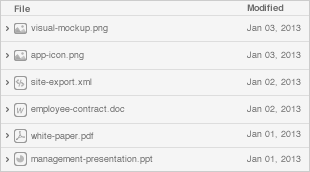
- You have licensed "SAP S/4HANA" and "SAP S/4HANA for product compliance": you have the choice to either use the so-called "classic functionality" or the "new functionality". For more details please check the attached presentation.
- You have subscribed to "SAP S/4HANA Cloud, private edition" and "SAP S/4HANA Cloud for product compliance, private edition": you have the choice to either use the so-called "classic functionality" or the "new functionality". For more details please check the attached presentation.
- You have subscribed to "SAP S/4HANA Cloud, public edition" and "SAP S/4HANA Cloud for product compliance, public edition": you can use the Product Compliance "new functionality".
Business Rules
The decision may translate into business rules which enforce the decision and will require configuration. List these business rules here. For example, "An Outline Agreement cannot be created via the RFQ process. An awarded RFQ can only result in a Purchase Order".
Options considered
List the options (viable options or alternatives) you considered. These often require a longer explanation with diagrams, or references to other documents (links are best, but attachments are also possible). Use enough detail to adequately explain what you considered so that a project or business stakeholder reviewing this decision will not come back and ask "did you think about...?"; this leads to loss of credibility and questioning of other decisions. This section also helps ensure that you considered enough suitable alternatives rather than just copy/pasting SAP's recommendations.

Option 1: New Version
Decribe the option in sufficient detail for a reader familiar with the subject matter to understand it properly
- New process model, SAP Fiori apps
- New data model, CDS-based
- New integration into product master, sales, delivery, procurement, transportation
- No full scope yet, innovation roadmap
Option 2: Classic Version
Decribe the option in sufficient detail for a reader familiar with the subject matter to understand it properly
- All features of the SAP ERP based product safety and product compliance solutions
- SAP GUI and Web Dynpro transactions
- Specification database, workbench approach
- Full scope, no functional enhancements
Option 3: Remain with ECC 6.0 'On premise'
Decribe the option in sufficient detail for a reader familiar with the subject matter to understand it properly
There is the option to remain with AS IS hence stay with SAP ECC 6.0, which is supported until the end of 2027. Thereafter the extended support from SAP is available, whilst it will no longer be free and becomes chargeable.
Evaluation
Outline why you selected a position. The best format could be a pro/con table (sample below), but is up to you as the author. You must consider complexity, feasibility, cost/effort to implement, but also ongoing operational impact and cost. You must consider the program principles and explain any deviations in detail. This is probably as important as the decision itself.
Weight (L/M/H) | Option A | Option B | Option C | |
|---|---|---|---|---|
| Compliance and Regulatory |
|
|
| |
| Business Impact |
|  Con Con |
| |
| Risk |
| |||
| Complexity |
|
Con |
Con | |
| Integration |
| |||
| Longevity |
|
 Pro
ProSee also
Insert links and references to other documents which are relevant when trying to understand this decision and its implications. Other decisions are often impacted, so it's good to list them here with links. Attachments are also possible but dangerous as they are static documents and not updated by their authors.
SAP OSS Note Product Compliance: Strategy and Roadmap Overview: 3015382_E_20240627 (sap.com)
SAP presentation as per SAP workshop at Walldorf June 2024: