| Status | |
| Owner | Stefanie Schwartz |
| Stakeholders | The persons consulted or otherwise involved in making this decision. Type @ to mention people by name |
Issue
Succinctly describe the issue or problem statement that this Decision addresses. Why is a decision required? What business or technical problem does it address?
Recommendation
Summarise the recommendation being made for the reader, leaving the pro/con evaluation and exact decision-making process to the subsequent sections.
Background & Context
Explain the context in which the decision is being made.
S/4 HANA 2023 Cloud, Private Edition
Waste Management in EHS for SAP S/4HANA Cloud, private edition, you can handle the management of waste generated by an organization. It is designed to help companies comply with environmental regulations and ensure proper handling, disposal, and reporting of waste materials.
The features provide functionalities to track and manage waste throughout its lifecycle, from generation to disposal. It enables organizations to record waste generation data, classify waste types, track waste storage locations, and manage waste transportation and disposal processes.
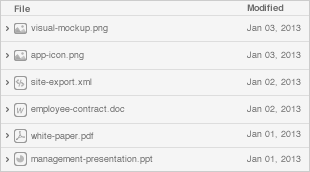
Waste Documents - Import of Delivery Notes
Delivery notes provide a record of the waste being transported, including its quantity, type, and origin. This documentation is crucial for regulatory compliance and helps ensure transparency and accountability in waste management. This means delivery notes enable the tracking of waste from its point of origin to its final destination. This helps authorities and waste management companies monitor the movement of waste and ensure it is handled appropriately. With the Import Delivery Notes app, you can use a template to import data from non-regulated waste transportation documents (delivery notes) that are provided by a disposer to confirm the transportation and disposal of non-hazardous waste. The system then creates entries for the waste transfer requests and waste transportation documents related to the completed waste shipments.
You can use this app to do the following:
- Import data from waste delivery notes using a downloadable template.
- Get an overview of waste delivery notes and their import status
- Search for delivery notes by file name and filter by import status.
- Navigate to the waste transportation documents and waste transfer requests that are created during the import.
- View validation messages for files that aren't imported.
- Export the information displayed in the overview table to a spreadsheet.
Improvements in Waste Permit Handling
Waste codes are often required by regulatory agencies to track and manage waste. They help ensure that waste is handled, transported, and disposed of in accordance with applicable laws and regulations. During waste management, the waste codes provide a common language for waste management professionals, allowing them to communicate and understand the characteristics and hazards associated with different types of waste. This information is crucial for determining appropriate handling, storage, treatment, and disposal methods. With this new 2023 release, improvements for working with waste permits have been introduced. When you are creating or editing a permit, the Waste Data section now appears only when the domain Waste has been selected Additionally, when a domain is selected, the list of available permit types is now restricted to permit types relevant to the selected domain.
Assumptions
Clearly describe the underlying assumptions which informed or limited the choices available, or impacted the decision: cost, schedule, regulatory requirements, business drivers, country footprint, technology, etc. Include links as necessary. This section is important because a future change in circumstances might invalidate some key assumptions, which then prompts a decision to be revisited.
Constraints
Capture any constraints or limitations inherent to the recommended option. This could be aspects which, if changed or removed in future, could cause the decision to be revisited or invalidated. For example, a constraint might be that a new product has significant gaps in important functionality, which caused an older alternative to be recommended. If those gaps are closed in future, this might cause the decision to be invalidated.
Impacts
Describe the impact of the decision on other aspects such as other processes, infrastructure, other SAP modules or systems, data cleansing and migration, developments, automations, interfaces, in-flight projects, etc.
Business Rules
The decision may translate into business rules which enforce the decision and will require configuration. List these business rules here. For example, "An Outline Agreement cannot be created via the RFQ process. An awarded RFQ can only result in a Purchase Order".
Options considered
List the options (viable options or alternatives) you considered. These often require a longer explanation with diagrams, or references to other documents (links are best, but attachments are also possible). Use enough detail to adequately explain what you considered so that a project or business stakeholder reviewing this decision will not come back and ask "did you think about...?"; this leads to loss of credibility and questioning of other decisions. This section also helps ensure that you considered enough suitable alternatives rather than just copy/pasting SAP's recommendations.
Option A: Option Title
Decribe the option in sufficient detail for a reader familiar with the subject matter to understand it properly
Option B: Option Title
Decribe the option in sufficient detail for a reader familiar with the subject matter to understand it properly
Option C: Option Title
Decribe the option in sufficient detail for a reader familiar with the subject matter to understand it properly
Option D: Option Title
Decribe the option in sufficient detail for a reader familiar with the subject matter to understand it properly
Evaluation
Outline why you selected a position. The best format could be a pro/con table (sample below), but is up to you as the author. You must consider complexity, feasibility, cost/effort to implement, but also ongoing operational impact and cost. You must consider the program principles and explain any deviations in detail. This is probably as important as the decision itself.
Option A | Option B | Option C | Option D | |
|---|---|---|---|---|
| Criterion 1 |
|
|
|
|
| Criterion 2 |
|  Con Con |
|
|
| Criterion 3 |  Pro Pro | Con | Con | Pro |
See also
Insert links and references to other documents which are relevant when trying to understand this decision and its implications. Other decisions are often impacted, so it's good to list them here with links. Attachments are also possible but dangerous as they are static documents and not updated by their authors.