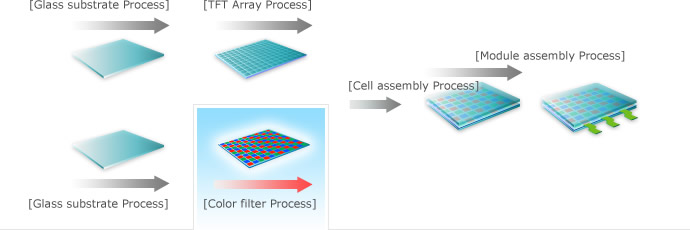
RGB layer formation, specifically in the context of color filters for displays, involves creating a patterned array of red, green, and blue (RGB) color resists on a substrate. This is typically achieved using photolithography, where a black matrix is first formed to prevent color mixing, followed by coating the substrate with color resist and selectively exposing it to UV light through a photomask to create the desired RGB pattern
1. Black Matrix Formation:
2. Color Resist Coating:
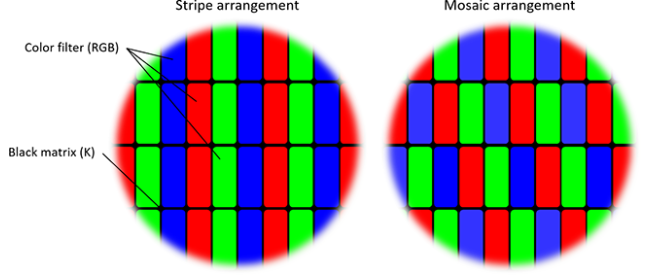
3. Exposure and Development:
4. Baking:
In essence, color filters are created by selectively depositing and patterning these RGB color resists on a substrate, forming a mosaic of color subpixels that, when viewed together, create a full-color image.
This process is crucial for displays like LCDs, where the color filter selectively filters the light from a backlight to produce the desired colors on the screen.