| Status | |
|---|---|
| Owner | RAYUDU-ext, Narasimha Kumar |
| Stakeholders | The business stakeholders involved in making, reviewing, and endorsing this decision. Type @ to mention people by name |
Purpose
The purpose of this document is to define the conversion approach to define GTS - LTSD Request in S/4 HANA GTS Edition.
In SAP GTS (Global Trade Services), GTS - LTSD Request can be requested and managed through various functions. Users can request LTSDs with or without reference to logistics documents, or through an annual run process. The system allows for requesting, reminding, and maintaining LTSDs, including features for mass maintenance and partner material information transfer.
As part of the Syway program, WGP - GTS 11.0 will be upgraded to SAP S/4 GTS E4H Edition. For this master data object, the data must be extracted from the current system and loaded into the new GTS E4H system with minimal transformations.
Conversion Scope
The scope of this document covers the approach for converting active GTS - LTSD Request from Legacy Source System into GTS S/4HANA following the GTS - LTSD Request Data Design Standard.
The data from legacy system includes:
- Timeframe considered for the data at the time of Go-Live: current year-2 years. Examples are provided in 3) Scenario Based
- REQUESTED_START_DATE
- REQUESTED_END_DATE
- LTSD Status Criteria
• The LTSD request must be open, pending, or recently completed.
• The LTSD must be linked to active suppliers or materials. - Scenario-Based Migration Decisions (For Eg: Go-Live Date: July 2026)
• 4.1 If the LTSD Requested End Date until December 2026 (same year as Go-Live), migrate the record.
• 4.2 If the LTSD Requested End Date until December 2027 or later (future years), migrate the record.
• 4.3 If the LTSD Requested End Date until January 2026 (same year as Go-Live), migrate the record.
• 4.4 If the LTSD Requested End Date until January 2025, migrate the record to maintain two years of historical data (i.e., keep records from 2024, 2025, and 2026).
The data from legacy system excludes:
Do not migrate declarations that do not meet the above validity, linkage, or cancellation requirements.
| Source | Scope | Source Approx No. of Records | Target System | Target Approx No. of Records |
|---|---|---|---|---|
| WGP | TBD | TBD |
Additional Information
Multi-language Requirement
NA
Document Management
NA
Legal Requirement
NA
Special Requirements
NA
Target Design
The technical design of the target for this conversion approach.
| Table | Field | Data Element | Field Description | Data Type | Length | Requirement |
|---|---|---|---|---|---|---|
| /SAPSLL/SDREQHD | SDREQHD_UUID | /SAPSLL/SDRHD_GUID | Request Header UUID-Primary Key (Universal Unique Identifier (UUID)) is linked to Primary key of /SAPSLL/SDREQIT-SDREQIT_UUID | RAW | 16 | System |
| /SAPSLL/SDREQHD | REQUEST_NUMBER | /SAPSLL/REQNUM | LTSD Request-The LTSD Request | CHAR | 35 | Mandatory |
| /SAPSLL/SDREQHD | STATUS | /SAPSLL/STATUS | Request Status-The LTSD Request status refers to: 1)ready to send, 2)sent, 3)completed, 4)reminder open, 5)reminder sent | CHAR | 1 | Mandatory |
| /SAPSLL/SDREQHD | OUTPUT FAILED | /SAPSLL/OUTP_FAILED | Output Failed-If LTSD request fails, the output will take an X (output failed), or blank if undefined | CHAR | 1 | Mandatory |
| /SAPSLL/SDREQHD | ADMIN_UNIT | /SAPSLL/ADMIN_UNIT | Administrative Unit-Group of plants mapped from feeder system | CHAR | 10 | Mandatory |
| /SAPSLL/SDREQHD | LOGICAL_SYSTEM_GROUP | /SAPSLL/LOGSYS_GRP | Logical System Group-Logical System Group from where LTSD was requested | CHAR | 10 | Mandatory |
| /SAPSLL/SDREQHD | RECEIVER | /SAPSLL/RCVR | Recipient-Business Partner Supplier who is receiving the LTSD Request | CHAR | 12 | Mandatory |
| /SAPSLL/SDREQHD | REQUESTED_START_DATE | /SAPSLL/REQSTRTDT | Requested From-Requested From | DATS | 8 | Mandatory |
| /SAPSLL/SDREQHD | REQUESTED_END_DATE | /SAPSLL/REQENDDT | Requested To-Requested To | DATS | 8 | Mandatory |
| /SAPSLL/SDREQHD | REQUEST_DATE | /SAPSLL/REQDATE | Requested On-Date when LTSD is requested | DATS | 8 | Mandatory |
| /SAPSLL/SDREQHD | CONTACT_PERSON | /SAPSLL/CONTACT_PERS | Contact Person-User who requested the LTSD | CHAR | 12 | Mandatory |
| /SAPSLL/SDREQHD | IS_MIGRATED | /SAPSLL/ISMIGRATED | Migrated-For LTSD Requests migrated, this field will be marked as X (Migrated), otherwise blank | CHAR | 1 | Mandatory |
| /SAPSLL/SDREQHD | REMARK | /SAPSLL/REMARK | Note-Note/comment if any | CHAR | 255 | Mandatory |
| /SAPSLL/SDREQHD | REMINDER_LEVEL | /SAPSLL/REM_LEVEL | Reminder Level-Reminder levels for LTSD are used to manage the sending of reminders to suppliers for pending declarations. This functionality helps ensure timely receipt of declarations by allowing users to set up and manage reminders for outstanding requests | NUMC | 2 | Mandatory |
| /SAPSLL/SDREQHD | REMINDER_DATE | /SAPSLL/REM_DATE | Reminder Date-Reminder Date | DATS | 8 | Mandatory |
| /SAPSLL/SDREQHD | CREA_DATE_TIME | /SAPSLL/CREA_DTTM | Time Stamp-Time Stamp generated by the system when LTSD was created | TIMESTAMP | 15 | System Generated |
| /SAPSLL/SDREQHD | CREA_UNAME | /SAPSLL/CREA_UNAME | User Name-User name who generated the LTSD request | CHAR | 12 | System Generated |
| /SAPSLL/SDREQHD | LCHG_DATE_TIME | /SAPSLL/LCHG_DTTM | Time Stamp-Time Stamp generated by the system when LTSD was created | TIMESTAMP | 15 | System Generated |
| /SAPSLL/SDREQHD | LCHG_UNAME | /SAPSLL/LCHG_UNAME | User Name-User name who generated the LTSD request | CHAR | 12 | System Generated |
| /SAPSLL/SDREQIT | SDREQIT_UUID | /SAPSLL/UUID | Request Item UUID-Primary Key (Universal Unique Identifier (UUID)) is linked to Primary key of /SAPSLL/SDREQHD-SDREQHD_UUID | RAW | 16 | System Generated |
| /SAPSLL/SDREQIT | PREF_TRADE_AGREEEMENT | /SAPSLL/PREFTA | Agreement-The free trade agreement of the Legal Regulation | CHAR | 10 | Mandatory |
| /SAPSLL/SDREQIT | PRODUCT_UUID | /SAPSLL/UUID | Product UUID-Product UUID linked to key from /SAPSLL/PAGGLOG-PRODUCT_UUID | RAW | 16 | System Generated |
| /SAPSLL/SDREQIT | STATUS | /SAPSLL/STA_SDREQIT | Item Status-Preference request item status: 1)ready to send, 2)sent, 3)response received, 4)completed, 5)reminder sent, 6) canceled, 7) excluded, 8) reminder open | CHAR | 1 | Mandatory |
| /SAPSLL/SDREQIT | SOURCE | /SAPSLL/SOURCE | Source-Source of Product in a Request (1. purchasing document, 2. material document, 3. added manually, 4. purchasing document and material document , 5. annual request run) | CHAR | 1 | Mandatory |
| /SAPSLL/SDREQIT | SDREQHD_UUID | /SAPSLL/UUID | Request Header UUID-Universal Unique Identifier (UUID) is linked to key of /SAPSLL/SDREQRF-SDREQHD_UUID | RAW | 16 | System Generated |
Data Cleansing
All data cleansing should take place in the data source system as defined in this document, unless system limitations prevent it.
If data cleansing is managed outside of the source system (e.g. Syniti Migrate, 3rd Party Vendor, DCT), the necessary documentation must be produced and appended to this deliverable for sign-off.
| ID | Criticality | Error Message/Report Description | Rule | Output | Source System |
|---|---|---|---|---|---|
| NA | NA | NA | NA | NA |
Conversion Process
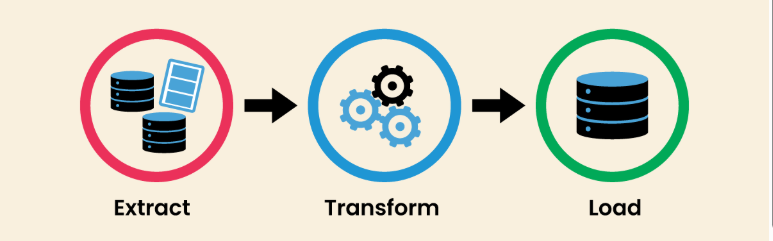
The high-level process is represented by the diagram below:
Data Privacy and Sensitivity
NAExtraction
Extract data from a source into Syniti Migrate. There are 2 possibilities:
- The data exists. Syniti Migrate connects to the source and loads the data into Syniti Migrate. There are 3 methods:
- Perform full data extraction from relevant tables in the source system(s).
- Perform extraction through the application layer.
- Only if Syniti Migrate; cannot connect to the source, data is loaded to the repository from the provided source system extract/report.
- The data does not exist (or cannot be converted from its current state). The data is manually collected by the business directly in Syniti Migrate. This is to be conducted using DCT (Data Collection Template) in Syniti Migrate
The agreed Relevancy criteria is applied to the extracted records to identify the records that are applicable for the Target loads
Extraction Run Sheet
| Req # | Requirement Description | Team Responsible |
|---|---|---|
| 1 | Legacy System Extraction (WGP) based on the Relevancy Rules from Table: /SAPSLL/SDREQHD & /SAPSLL/SDREQIT | Syniti |
Selection Screen
If applicable, this section will give the details on any selection screen parameters, including the parameter type, that are required to be entered to ensure consistent data extracts.| Selection Ref Screen | Parameter Name | Selection Type | Requirement | Value to be entered/set |
|---|---|---|---|---|
NA |
Data Collection Template (DCT)
Target Ready Data Collection Template will be created for Data Object data with exception of some fields which require transformation as mentioned in the transformation rule.DCT Rules
| Field Name | Field Description | Rule |
|---|---|---|
| NA |
Extraction Dependencies
List the steps that need to occur before extraction can commence
| Item # | Step Description | Team Responsible |
|---|---|---|
| 1 | Extract data from source systems WGP | Syniti |
| 2 | Populate in a report in a Downloadable format | Syniti |
| 3 | Data is validated in ADMM Tool | SyWay Data Team |
| 5 | The data which has passed validation will be used for transformation/further processing | Business/Data Owners |
Transformation
The Target fields are mapped to the applicable Legacy field that will be its source, this is a 3-way activity involving the Business, Functional team and Data team. This identifies the transformation activity required to allow Syniti Migrate to make the data Target ready:
- Perform value mapping and data transformation rules.
- Legacy values are mapped to the to-be values (this could include a default value)
- Values are transformed according to the rules defined in Syniti Migrate
- Prepare target-ready data in the structure and format that is required for loading via prescribed Load Tool. This step also produces the load data ready for business to perform Pre-load Data Validation
Transformation Run Sheet
| Item # | Step Description | Team Responsible |
|---|---|---|
1 | Obtain Transformation Rules Sign-off from Business. | SCM Data Team |
2 | In dspMigrate, select the wave – S4/HANA – INT-GTS | Syniti |
3 | Go to Process Area Launch and Process the Object – GTS LTSD Request | Syniti |
4 | Review and Validate Error and Preload Reports | Syniti |
5 | Execute the transformation to prepare the target tables | Syniti |
6 | Validate data from pre-load and error reports | Business/Data owner |
7 | Generate load files | Syniti |
Transformation Rules
| Rule # | Source system | Source Table | Source Field | Source Description | Target System | Target Table | Target Field | Target Description | Transformation Logic |
|---|---|---|---|---|---|---|---|---|---|
| 1 | WGP | /SAPSLL/SDREQHD | SDREQHD_UUID | Request Header UUID | S/4 HANA GTS | /SAPSLL/SDREQHD | SDREQHD_UUID | Request Header UUID | This Field should be used as a Link to Header and Item table |
| 2 | WGP | /SAPSLL/SDREQHD | REQUEST_NUMBER | LTSD Request | S/4 HANA GTS | /SAPSLL/SDREQHD | REQUEST_NUMBER | LTSD Request | Direct Mapping |
| 3 | WGP | /SAPSLL/SDREQHD | STATUS | Request Status | S/4 HANA GTS | /SAPSLL/SDREQHD | STATUS | Request Status | Direct Mapping |
| 4 | WGP | /SAPSLL/SDREQHD | OUTPUT FAILED | Output Failed | S/4 HANA GTS | /SAPSLL/SDREQHD | OUTPUT FAILED | Output Failed | Direct Mapping |
| 5 | WGP | /SAPSLL/SDREQHD | ADMIN_UNIT | Administrative Unit | S/4 HANA GTS | /SAPSLL/SDREQHD | ADMIN_UNIT | Administrative Unit | Direct Mapping |
| 6 | WGP | /SAPSLL/SDREQHD | LOGICAL_SYSTEM_GROUP | Logical System Group | S/4 HANA GTS | /SAPSLL/SDREQHD | LOGICAL_SYSTEM_GROUP | Logical System Group | Direct Mapping |
| 7 | WGP | /SAPSLL/SDREQHD | RECEIVER | Recipient | S/4 HANA GTS | /SAPSLL/SDREQHD | RECEIVER | Recipient | This is the Supplier Number and need to to derive from Cross Reference Tables. |
| 8 | WGP | /SAPSLL/SDREQHD | REQUESTED_START_DATE | Requested From | S/4 HANA GTS | /SAPSLL/SDREQHD | REQUESTED_START_DATE | Requested From | Direct Mapping |
| 9 | WGP | /SAPSLL/SDREQHD | REQUESTED_END_DATE | Requested To | S/4 HANA GTS | /SAPSLL/SDREQHD | REQUESTED_END_DATE | Requested To | Direct Mapping |
| 10 | WGP | /SAPSLL/SDREQHD | REQUEST_DATE | Requested On | S/4 HANA GTS | /SAPSLL/SDREQHD | REQUEST_DATE | Requested On | Direct Mapping |
| 11 | WGP | /SAPSLL/SDREQHD | CONTACT_PERSON | Contact Person | S/4 HANA GTS | /SAPSLL/SDREQHD | CONTACT_PERSON | Contact Person | Direct Mapping |
| 12 | WGP | /SAPSLL/SDREQHD | IS_MIGRATED | Migrated | S/4 HANA GTS | /SAPSLL/SDREQHD | IS_MIGRATED | Migrated | Direct Mapping |
| 13 | WGP | /SAPSLL/SDREQHD | REMARK | Note | S/4 HANA GTS | /SAPSLL/SDREQHD | REMARK | Note | Direct Mapping |
| 14 | WGP | /SAPSLL/SDREQHD | REMINDER_LEVEL | Reminder Level | S/4 HANA GTS | /SAPSLL/SDREQHD | REMINDER_LEVEL | Reminder Level | Direct Mapping |
| 15 | WGP | /SAPSLL/SDREQHD | REMINDER_DATE | Reminder Date | S/4 HANA GTS | /SAPSLL/SDREQHD | REMINDER_DATE | Reminder Date | Direct Mapping |
| 16 | WGP | /SAPSLL/SDREQHD | CREA_DATE_TIME | Time Stamp | S/4 HANA GTS | /SAPSLL/SDREQHD | CREA_DATE_TIME | Time Stamp | Direct Mapping |
| 17 | WGP | /SAPSLL/SDREQHD | CREA_UNAME | User Name | S/4 HANA GTS | /SAPSLL/SDREQHD | CREA_UNAME | User Name | Direct Mapping |
| 18 | WGP | /SAPSLL/SDREQHD | LCHG_DATE_TIME | Time Stamp | S/4 HANA GTS | /SAPSLL/SDREQHD | LCHG_DATE_TIME | Time Stamp | Direct Mapping |
| 19 | WGP | /SAPSLL/SDREQHD | LCHG_UNAME | User Name | S/4 HANA GTS | /SAPSLL/SDREQHD | LCHG_UNAME | User Name | Direct Mapping |
| 20 | WGP | /SAPSLL/SDREQIT | SDREQIT_UUID | Request Item UUID | S/4 HANA GTS | /SAPSLL/SDREQIT | SDREQIT_UUID | Request Item UUID | This Field should be used as a Link to Header and Item table |
| 21 | WGP | /SAPSLL/SDREQIT | PREF_TRADE_AGREEEMENT | Agreement | S/4 HANA GTS | /SAPSLL/SDREQIT | PREF_TRADE_AGREEEMENT | Agreement | Direct Mapping |
| 22 | WGP | /SAPSLL/SDREQIT | PRODUCT_UUID | Product UUID | S/4 HANA GTS | /SAPSLL/SDREQIT | PRODUCT_UUID | Product UUID | Direct Mapping |
| 23 | WGP | /SAPSLL/SDREQIT | STATUS | Item Status | S/4 HANA GTS | /SAPSLL/SDREQIT | STATUS | Item Status | Direct Mapping |
| 24 | WGP | /SAPSLL/SDREQIT | SOURCE | Source | S/4 HANA GTS | /SAPSLL/SDREQIT | SOURCE | Source | Direct Mapping |
| 25 | WGP | /SAPSLL/SDREQIT | SDREQHD_UUID | Request Header UUID | S/4 HANA GTS | /SAPSLL/SDREQIT | SDREQHD_UUID | Request Header UUID | Direct Mapping |
Transformation Mapping
Use the exact name and reference this section in the “Transformation rules” above| Mapping Table Name | Mapping Table Description |
|---|---|
| zLegacySupplier | SAP S4 HANA BP |
Transformation Dependencies
List the steps that need to occur before transformation can commence1 | Ensure Legacy System tables completeness | Syniti |
2 | Ensure all Transformation mappings are up to date. | Syniti |
Pre-Load Validation
Project Team
Completeness
| Task | Action |
|---|---|
| Verify Load File Count | SCM Data Team to verify that the total number of relevant records from the WGP System is equal to the total number of records in the Preload and Load Sheets. |
Verify Consent | Verify the appropriate consents for the records have been obtained by the business/Data Owners and properly recorded |
Accuracy
| Task | Action |
|---|---|
Conversion Accuracy | SCM Data team to verify that all the data in the load table/file is accurate as contents and transformation rules with below checks:
|
| Review Error Reports | Review and correct the errors. Achieve a zero-error record count as much as possible. Raise defects for data remediated and requiring a correction in the source data. |
Business
The following pre-load validations will be performed by the business.Completeness
| Task | Action |
|---|---|
| Verify Record Count | Business Data Owner/s to verify that the total number of relevant records in Syniti tool equal to the total number of records in the Preload and Load Sheets. |
Verify Consent | Verify that the appropriate consents for the records have been obtained by the business and properly recorded |
Accuracy
| Task | Action |
|---|---|
Conversion Accuracy | Business Data Owner/s to verify that all the data in the load table/file is accurate as per endorsed transformation/mapping rules. |
Load
The load process includes:
- Execute the automated data load into target system using load tool or product the load file if the load must be done manually
- Once the data is loaded to the target system, it will be extracted and prepared for Post Load Data Validation
- Load approach: Migration Cockpit using Staging Tables
Load Run Sheet
| Item # | Step Description | Team Responsible |
|---|---|---|
1 | Ensure Pre-load sign-offs are obtained. | SCM Data team |
2 | Go to the load tool and select the correct load Program. | SCM Data team |
3 | Proceed with Data load. | SCM Data team |
4 | Validate few records loaded by accessing standard transactions. | SCM Data team |
5 | Generate the post load reports in the tool. | SCM Data team |
6 | Log errors as defects, if any and address resolutions. Close defects. | SCM Data team |
7 | Resolve defects by re-upload and re-generate post load reports if necessary. | SCM Data team |
8 | Business to validate the post load files as part of post-load validation, raise data defects or provide the post-load sign-off. | Business |
9 | Repeat steps 5 to 7 if necessary. | SCM Data team |
Load Phase and Dependencies
Pre Cutover
Configuration
List the Configurations required before loading can commence
| Item # | Configuration Item |
|---|---|
| TBD | |
Conversion Objects
| Object # | Preceding Object Conversion Approach |
|---|---|
| NA | NA |
Error Handling
The table below depicts some possible system errors for this data object during data load. All data load error is to be logged as defect and managed within the Defect Management
| Error Type | Error Description | Action Taken |
|---|---|---|
| Configuration | <configuration> is not valid/missing | If it is a missing configuration item, then engage Functional team to expedite and fix the error in the system. |
Invalid Data | <parameter> is not valid. | The parameter entry needs to be reviewed If it is an invalid data, business needs to review and correct the source of the data either in WGP or if it’s mapped in DCT. |
Technical Setup | Interface / Connection issue within target system’s landscape | N/A – the data will be loaded directly to S/4HANA GTS System environment |
Post-Load Validation
Project Team
Completeness
| Task | Action |
|---|---|
| Verify the count | Verify that the record count in the post-load file is the same as the record count based on the relevancy (including any deduplication) results |
Accuracy
| Task | Action |
|---|---|
Data Accuracy | SCM Data team to verify that all the data in the post load table/file is accurate as per signed-off transformation rules |
Error Reports | Verify that all necessary error reports have been validated, and that errors have been addressed. |
Data Consistency | Verify that the data loaded is correctly reflected in Table: /SAPSLL/SDREQHD & /SAPSLL/SDREQIT |
Business
The following post-load validations will be performed by the business.Completeness
| Task | Action |
|---|---|
Verify Count | Verify that the record count in the post load file is the same as the record count based on the relevancy (including deduplication) results |
Validate Loaded Data | Validate, as per the load files signed-off, that all records were created |
Accuracy
| Task | Action |
|---|---|
Data Accuracy | Verify that all the data in the S/4HANA GTS table is accurate as per signed-off transformation rules |
Key Assumptions
- The Master Data Standards document is a evolving document where value mappings/validation checks are still being finalized as we are currently in the detailed phase as of September 2025.
- GTS - LTSD Request is in scope based on data design and any exception requested by business.
Any additional key assumptions.
See also
Insert links and references to other documents which are relevant when trying to understand this decision and its implications. Other decisions are often impacted, so it's good to list them here with links. Attachments are also possible but dangerous as they are static documents and not updated by their authors.