


Simplified Cash Flow (SCF) and Free Cash Flow (FCF)
Introduction of cash flow
Cash flow is a complex and multi-dimension indicator implying both
- operating parameters under direct business control
- Underlying EBITDA
- Industrial Working Capital
- CAPEX
- ...
- non-operating parameters not fully under business control
- non-operating Working Capital
- Tax
- ...
Solvay has defined 2 levels of cash flow
- Simplified Cash Flow (SCF) under direct business control and responsibility
- Free Cash Flow (FCF) at Group level
Computation of the Simplified and Free Cash Flow
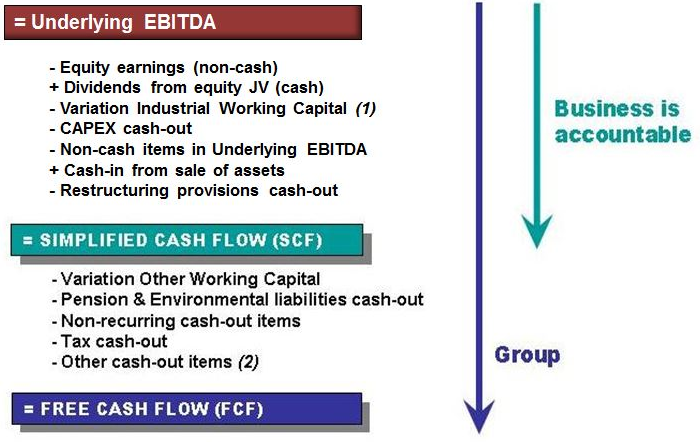
1. = Year-1 Working Capital (WC), restructured and translated using the month rate (actual), less actual WC at month end.
2. Examples:
- prepaid expenses,
- neutralization of OOIE (Other Operating Income and Expenses), excluding gain/loss on disposal, and recognition of OOIE cash for the period,
- payment delay for employee benefits and tax liabilities
Managing Cash Flow: On top of Underlying EBIDTA, managing cash flow adds few more levers:
- Working Capital: management of
- receivables
- minimize overdues (pre-collection and pre-litigation monitoring)
- payment terms extension at contract negociation
- receivables
- inventories
- "just needed" inventories tool from industrial function to set targets
- supply chain optimization (e.g.: "make to order" approach vs "make to inventory", constant adjustment of production to demand)
- payables
- optimum purchase timing / schedule
- payment terms optimization at purchase negociation
- CAPEX
- identify right timing to invest
- investigate alternatives and non-capital solutions
- Arbitration between Underlying EBITDA and Cash Flow