Versions Compared

Key

  • This line was added.
  • This line was removed.
  • Formatting was changed.

Principle

The aim of the laboratory is the qualitative and quantitative determination of PFAS and fluorosurfactants at trace levels in a wide range of polymeric materials (both solid and liquid) and environmental matrices following national and international methodologies, as well as internal methods. The laboratory activity also include the development and validation of analytical method for the determination of fluorosurfactants in new products and raw materials.

Capabilities

  • Quantification of VOCs and SVOCs in different matrices: polymers, dispersions, final products, waters, gas, ecc…
  • Quantitative determination of fluorosurfactants in different matrices: polymers, dispersions, final products, waters, ecc…;
  • Determination of purity;
  • Analysis of gas mixtures. 

Assets

AssetDetails

Image Removed

Agilent Technologies 7890 GC System

GC System with autosampler for liquid injection and TCD and FID detectors

Image Removed

Agilent Technologies 7820A GC System

GC System with autosampler for liquid and HeadSpace injection and TCD and FID detectors

Image Removed

Agilent Technologies 7890A GC System

GC System with autosampler for liquid injection, microECD and FID detectors and LTM Column Module.

Image Removed

Agilent Technologies 7890B GC System

GC System with autosampler for liquid and HeadSpace injection and TCD and FID detectors

Image Removed

Thermo Scientific Trace 1310GC System with Valve Oven and ECD and FID detectors

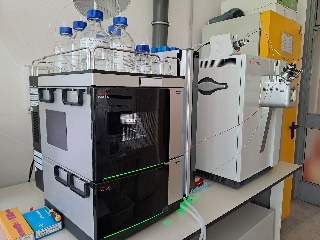
LC is a common technique used to separate non-volatile compounds from complex mixtures. This separation is based on the interactions of the molecules with the mobile and stationary phases. 

It is frequently coupled to a wide variety of detectors, such as Ultraviolet-Visible (LC-UV/Vis) and mass spectrometer (LC-MS, LC-MS/MS and LC-IT/MS), that cover a broad range of sensitivity, specificity and selectivity, providing both qualitative and quantitative information.

High Resolution Mass Spectrometry (HRMS) is used for identification of new and unknown PFAS, including potential transformation and reaction-intermediate products in both polymeric and environmental samples. HRMS provides more information about sample composition, useful for material characterization and process manufacturing, and allows prioritization of substances for further target analysis.


Capabilities

  • (Ultra) trace analysis of PFAS and fluorosurfactants in polymeric materials.
  •  Determination of PFAS residues in environmental samples (water, air) during monitoring and control procedures.
  •  Qualitative and quantitative analysis of intermediate products. 
  •  Identification of unknown compounds during the development and production of new materials
  •  Identification of fluorosurfactants chemical structure or isotopic composition
  •  Rapid quantitative and conformational screening for unknown structures

Assets


AssetDetails

Image Added

Thermo LCQ Fleet

Ion Trap LC-MS (LC-IT/MS)

Image Added

Agilent 6470

Triple Quadrupole mass spectrometer (QqQ MS)


Sensibility range from ppb to ppt

Image Added

Agilent 6495 (x2)

Image Added

Agilent 1100

Ultraviolet-Visible Liquid Chromatography (LC-UV/Vis) (x2)

Image Added

Orbitrap Exploris 120

High Resolution Mass Spectrometry (HRMAS)


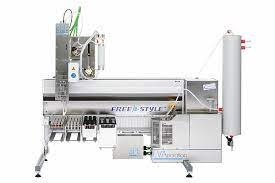
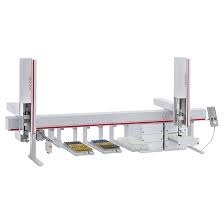
Automation Asset

Image Added

LCTech GmbH – FREESTYLE SPEAutomated Solid Phase Extraction (SPE)

Image Added

Gerstel MultiPurpose (MPS) RoboticPROAutomated sample preparation and sample introduction

Image Added

Automated Solid Phase Extraction (SPE)Thermo Scientific Dionex AutoTrace 280 SPE PFAS