


| Status | Approved |
| Owner | Stephen McCartney |
| Stakeholders |
Issue
Currently Syensqo has multiple SAP systems (WPX, WP1 and PF1) and a single real-world material can be on different systems with a different Material Master number in each. As part of moving to a single new system and the associated data cleanse, a single system needs to align the material (and other transactional legacy data) so the same real-world material has the same number in the new system. Realigning the material data will also have an impact on any legacy data that is brought over as it will have to contain any material's new number in the single system.
Recommendation
To realign the material master numbers across the system so that the same real world material has the same number and is easily identifiable globally and start with a new numbering scheme rather than copy over any from a legacy system. For simplicity the numbering scheme should be a sequential number range with no intelligence, potentially with differing number ranges split by material type.
Background & Context
Syensqo is implementing a new single entity S/4 HANA system which will mandate some alignment of Material Master numbering. The following factors need to be considered in evaluating what is the best approach for this alignment.
The business benefits of aligning material numbers
Historically Syensqo has let plants maintain their own Material Master data across three different systems. This means that while Syensqo may use the same real-world physical materials across the world, a single materials may have been created under different material master numbers in each system which has made it hard to get a global view of the usage and availability of the same material.
The need to align as part of the new ERP Rebuild system
Implementing S4 HANA as a single entity means that the same real-world materials which had different numbers in the old systems now have to be aligned to the same number in the new system.
The impact on data migration effort
This will have an impact on the data migration of master and transaction data to the new system and will have a change management impact on the users who will have to use a different material number for old materials. The materials in each system will need to be compared to find genuine same Real-world materials and any legacy transaction data using these materials will need to be updated with the new single material number.
This change may also cause confusion if, as expected WPX remains as a separate system. A pre-existing material is likely to have its number changed to the new standard even though the users may perceive WPX as still being a separate system.
Assumptions
- The same physical material does actually get used by the different systems
- It is feasible to identify where the same physical materials are represented differently in the systems even when the descriptions or other factors may not be identical
Constraints
Once the new numbering is used there is not any simple way to revert to the old numbers in the new system
The new material master records should be able to hold all references to the old mateiral number in the different systems
The legacy data brought over will have to align with the new numbering regime
Changes to the numbering will have impacts across many parts of the system (procurement, Planning, Sales etc) and these need to be considered when reviewing the options.
Impacts
Legacy Data – Transactions
If we bring across legacy data from the WP1, PF1 and WPX systems then it will hold the old differing material numbers. If we do not amend the legacy data to include the new single numbering approach, then it will be invalid. Any changes will need to be applied to the legacy data.
Legacy Data – Master data
Any contracts or other master data will need to be replaced with the new material number – which for things like contracts could result in multiple contracts in the old system, with different pricing and conditions having to be aligned to a single standard.
The same applies to material master information at the Material wide level. E.g. Classification. If a material in one system mandates batches but in another system, it does not then one standard will have to be agreed on and the system aligned.
Legacy Data – Other Systems/distributed data (e.g. Ariba and Catalogs)
A new installation of Ariba could be uploaded with the new material standard without much impact. But the 400 or so Catalogs (External and static) would need to be checked for any legacy material numbers and have these updated. Most catalog items are used to Indirect Spend and do not use Material Masters but there is the possibility that some exist and so these should be confirmed and updated.
Legacy Data – Interfaces
Any EDI Interfaces using material numbers and therefor potential mapping to customer’s or vendor’s own material numbers will need to be investigated and re-mapped.
Legacy Data – Stock Levels, Material Pricing
When aligning three material masters, their legacy stock levels and their material pricing will all need to be consolidated into a single set of stock levels and a single valuation approach. This will be a significant change from a finance point of view and will have an impact on the corporate balance sheet. Therefor this part of the migration/unification will need to be done carefully and in close coordination with Finance.
Legacy Data – 3rd parties (Vendors and Customers)
If we change the material numbers that we order for we will need to update this with the vendors and customers or facilitate a mapping that lets them continue to use the old numbers. Mapping to the old numbers would be tricky as each new material numnber cold have up to three different old numbers and so it would be a vendor or customer specific number that would need to be mapped to.
Business Rules
There are no specific rules about material numbering but as hte Materail Master is used across the entire system there should be a general agreement on all parties as to the alignment chosen.
Options considered
Option 1 – Do not change the legacy material numbers and copy everything
Have each material replicated even if they we now have multiple versions of the same material on the new system
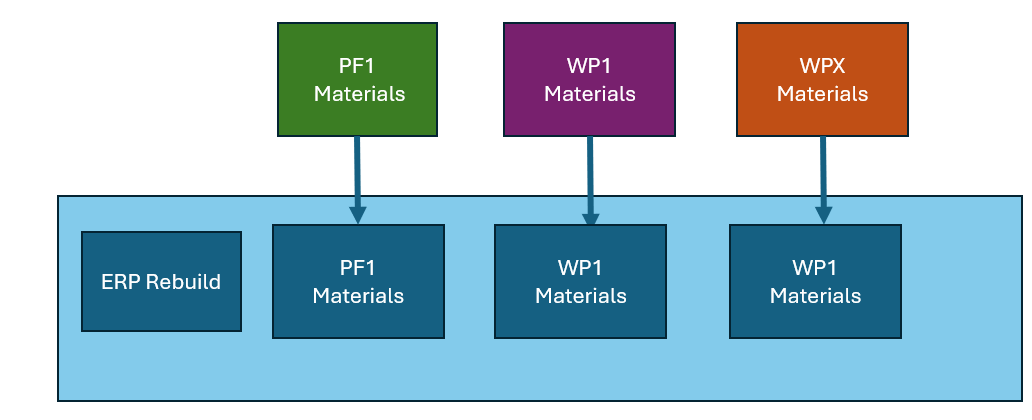
Advantages:
- No work required to map the materials to their new number
- No impact on legacy data
- No impact on vendors and customers as material numbers don’t change
Disadvantages:
- No global view of material data
- Significant duplication of material masters
- Confusing and inconsistent reporting
Option 2 – Create all the new Material Masters under new number ranges and de-duplicate the data.
Will need to add any legacy numbers into the new material masters for referencing.
Numbering Approach
As per the project philosophy the new number range should adhere to a simple standard - a sequential numeric number range, with no intelligence with the potential to split the number ranges by Material Type for ease of identification and separation.

- Simple clear approach
- No 'favouring' of any legacy system or group
- New clean standard can be achieved
Disadvantages:
- All Materials will get completely new numbers
- All Legacy transaction data with a material number should be mapped to the new numbers
- Reports using historical data will not be compatible with the new report data
- Need to create a vendor/customer mapping of the old to new material numbers or get the vendors to update
Option 3 – Copy over the data from one 'Master system' eg PF1 and continue to use its numbering, deduplicate the other systems and copy over with legacy numbers any unique items not in PF1

Advantages:
- Legacy data from the Master System does not need to be changed
- Some users and vendors will continue to use existing numbering making the adjustment to the new system easier
- Only need to build custom mapping for customers and suppliers for the non-Master System and potentially not all of that data either
Disadvantages:
- Confusing and inconsistent numbering of materials
- Confusing message to users as sometimes the number changes and sometimes it doesnt
- Confusing message to Vendors and Customers as sometimes new mapping is needed and sometimes its not
Evaluation
Based on the evaluation of the options, it is recommended that Syensqo should aim to align the material master numbering to a single standard in the new system and also align the master and transactional data brought across to the new standard to ensure accurate reporting and information in the new system. It should also work with customers and vendors to have them also use the new single material master numbers.
For simplicity the numbering scheme should be a sequential number range with no intelligence, potentially with differing number ranges split by material type.
Next Steps
- Work with the business to identify true real-world materials with multiple numbers across the system
- Work with data team to determine the amount of effort required to re0align any legacy master and transaction data to this new standard
| Option 1 - Copy all data | Option 2 - New Numbers | Option 3 - Copy from Master System | |
| Clear consistent approach and messaging | Yes - nothing changes | Yes - everything changes | No |
| Effort to change Legacy master and transaction data | Low (None) | High (all) | Medium (less changes but more effort to keep aligned) |
| Unified global standard view and approach | No | Yes | No - numbering is inconsistent |
| Removal of Duplicates | No | Yes | Yes |
See also
Change log
Workflow history
| Title | Last Updated By | Updated | Status | |
|---|---|---|---|---|
| There are no pages at the moment. | ||||