You are viewing an old version of this page. View the current version.

Compare with Current View Page History

« Previous Version 8 Next »

Principle

LC is a common technique used to separate non-volatile compounds from complex mixtures. This separation is based on the interactions of the molecules with the mobile and stationary phases. 

It is frequently coupled to a wide variety of detectors, such as Ultraviolet-Visible (LC-UV/Vis) and mass spectrometer (LC-MS, LC-MS/MS and LC-IT/MS), that cover a broad range of sensitivity, specificity and selectivity, providing both qualitative and quantitative information.


Capabilities

  • (Ultra) trace analysis of PFAS and fluorosurfactants in polymeric materials.
  •  Determination of PFAS residues in environmental samples (water, air) during monitoring and control procedures.
  •  Qualitative and quantitative analysis of intermediate products. 
  •  Identification of unknown compounds during the development and production of new materials
  •  Identification of fluorosurfactants chemical structure or isotopic composition
  •  Rapid quantitative and conformational screening for unknown structures

Assets


AssetDetails

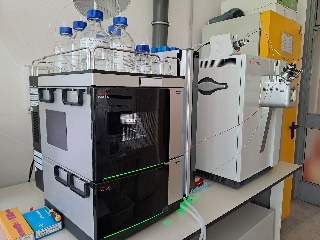
Thermo LCQ Fleet

Ion Trap LC-MS (LC-IT/MS)

Agilent 6110

Single Quadrupole mass spectrometer (LC-MS)

Agilent 6470

Triple Quadrupole mass spectrometer (QqQ MS)


Sensibility range from ppb to ppt

Agilent 6495 (x2)

Agilent 1100

Ultraviolet-Visible Liquid Chromatography (LC-UV/Vis) (x2)

Orbitrap Exploris 120

High Resolution Mass Spectrometry (HRMAS)


Automation Asset

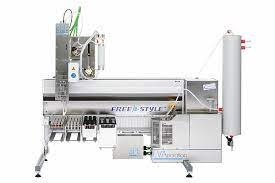
LCTech GmbH – FREESTYLE SPEAutomated Solid Phase Extraction (SPE)

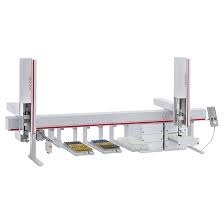
Gerstel MultiPurpose (MPS) RoboticPROAutomated sample preparation and sample introduction

  • No labels