
search
attachments
weblink
advanced
Overview
Content Tools
Tasks

DATE : 2013-07-24
Tianjin Dagu is in plans to shut its Styrene monomer (SM) plant for repairs.
A Polymerupdate source in China informed that the plant will be shut on either July 24 or July 25, 2013. It is likely to remain off-stream for around three days.
Located in Tianjin, China, the plant has production capacity of 500,000 mt/year.
SOURCE PolymerUpdate
Tianjin Dagu is in plans to shut its Styrene monomer (SM) plant for repairs.
A Polymerupdate source in China informed that the plant will be shut on either July 24 or July 25, 2013. It is likely to remain off-stream for around three days.
Located in Tianjin, China, the plant has production capacity of 500,000 mt/year.
SOURCE PolymerUpdate
DATE : 2013-07-24
Lukoil is in plans to operate an Acrylonitrile (ACN) plant at curtailed capacity levels.
A Polymerupdate source in Russia informed that over the next one month, the plant is expected to run at around 50% of production capacity. The intended lower rates are a result of unplanned repairs to be undertaken at the plant's reactor.
Located in Saratov, Russia, the plant has a production capacity of 140,000 mt/year.
SOURCE PolymerUpdate
Lukoil is in plans to operate an Acrylonitrile (ACN) plant at curtailed capacity levels.
A Polymerupdate source in Russia informed that over the next one month, the plant is expected to run at around 50% of production capacity. The intended lower rates are a result of unplanned repairs to be undertaken at the plant's reactor.
Located in Saratov, Russia, the plant has a production capacity of 140,000 mt/year.
SOURCE PolymerUpdate
DATE : 2013-07-22
China’s Qixiang Tengda Chemical has shut down its 100,000 tonne/year butadiene (BD) unit at Zibo in Shandong province because of weak prices of the olefin, the company said on Wednesday.
The exact shutdown date was not mentioned in the company’s announcement.
During the shutdown, the unit’s oxygenation and dehydrogenation process will be upgraded to bring down the production cost of BD, the company said in a disclosure to the Shenzhen Stock Exchange.
On 19 July, BD was assessed at an average of $870/tonne (€661/tonne) CFR (cost and freight) northeast (NE) Asia, down 60% from mid-february because of oversupply amid weak demand, according to ICIS data.
The shutdown’s duration will depend on how the upgrade works on the plant progress, the company said.
It expects this year’s BD production to be adversely affected by the shutdown.
BD-related products contributed 24.9% to Qixiang Tengda’s total operating revenue in 2012, according to the statement.
SOURCE Icis News
China’s Qixiang Tengda Chemical has shut down its 100,000 tonne/year butadiene (BD) unit at Zibo in Shandong province because of weak prices of the olefin, the company said on Wednesday.
The exact shutdown date was not mentioned in the company’s announcement.
During the shutdown, the unit’s oxygenation and dehydrogenation process will be upgraded to bring down the production cost of BD, the company said in a disclosure to the Shenzhen Stock Exchange.
On 19 July, BD was assessed at an average of $870/tonne (€661/tonne) CFR (cost and freight) northeast (NE) Asia, down 60% from mid-february because of oversupply amid weak demand, according to ICIS data.
The shutdown’s duration will depend on how the upgrade works on the plant progress, the company said.
It expects this year’s BD production to be adversely affected by the shutdown.
BD-related products contributed 24.9% to Qixiang Tengda’s total operating revenue in 2012, according to the statement.
SOURCE Icis News
Le Revenu le 23/07/2013
Le 5 juillet dernier, Saft a une fois de plus déçu le marché, avec un avertissement portant sur des coûts de recherche et de commercialisation plus élevés que prévu. La nouvelle n'a rien d'étonnant à la lecture d'une volumineuse étude (30 pages) d'Eric Ravary, analyste de CM-CIC Securities, rédigée à la suite de l'Advanced Automotive Battery Conference, fin juin. De prime abord, le secteur paraît alléchant. Les principales applications des batteries de nouvelle technologie (lithium-ion) et de grande dimension, pour l'automobile et le stockage d'énergie, «sont, en effet, promises à une forte croissance, avec des marchés estimés à 4 milliards de dollars, en 2018 et 15 milliards en 2025», fait valoir l'intermédiaire.
Néanmoins, constate l'analyste, le marché est «extrêmement concurrentiel et en situation de surcapacité de production (?) face à des producteurs asiatiques puissants». Les acteurs de taille moyenne, comme Saft et Bolloré, sont donc condamnés à une stratégie de niche, notamment dans le stockage d'énergie, qui est «un marché naissant plus ouvert que celui de l'automobile, marché de volume et de standardisation, mais où la pression des prix est la plus forte».
Bolloré, lui, n'utilise pas la technologie lithium-ion, mais la LMP (lithium métal polymère) qui, selon l'analyste, présente des «performances comparables à celle du lithium-ion et une sécurité supérieure, mais des coûts encore inconnus »et qui seront peut-être révélés, à l'occasion de l'introduction en Bourse de 10% du capital de Blue Solutions (Blue Car, stockage d'électricité), la filiale spécialisée du groupe Bolloré. Eric Ravary remarque en tout cas que «toute l'industrie automobile s'est déjà organisée autour de la technologie Li-ion».
Une équation à de trop nombreuses inconnues, d'ordre technologique et surtout bénéficiaire : voilà le sentiment que l'on titre de la lecture de l'étude de CM-CIC Securities qui n'engage pas, en tout cas, à détenir des actions Saft en portefeuille : «Le groupe est le leader rentable d'une activité à faible croissance, le Nickel-Cadmium, qui a vocation à perdre des parts de marché face au Lithium-ion, une technologie en forte croissance mais extrêmement concurrentielle.»
Quant à Bolloré, l'opinion positive du courtier à l'égard du titre tient essentiellement au dynamisme de son activité principale, le transport en Afrique et la logistique internationale : «L'introduction en Bourse de Blue Solutions permettra de donner une valeur de marché à une activité qui devrait connaître encore plusieurs années de pertes, mais l'enjeu de (re)valorisation à l'échelle du groupe nous paraît limité.» Bolloré dit avoir d'ores et déjà consacré environ 1,8 milliard d'euros d'investissements à son activité de batteries et de véhicules en auto-partage.
http://www.boursorama.com/actualites/batteries-un-eldorado-encore-tres-lointain- pour-saft-et-bollore-4fb891c7ce04c71bbcb8a5270a76b32a
Le 5 juillet dernier, Saft a une fois de plus déçu le marché, avec un avertissement portant sur des coûts de recherche et de commercialisation plus élevés que prévu. La nouvelle n'a rien d'étonnant à la lecture d'une volumineuse étude (30 pages) d'Eric Ravary, analyste de CM-CIC Securities, rédigée à la suite de l'Advanced Automotive Battery Conference, fin juin. De prime abord, le secteur paraît alléchant. Les principales applications des batteries de nouvelle technologie (lithium-ion) et de grande dimension, pour l'automobile et le stockage d'énergie, «sont, en effet, promises à une forte croissance, avec des marchés estimés à 4 milliards de dollars, en 2018 et 15 milliards en 2025», fait valoir l'intermédiaire.
Néanmoins, constate l'analyste, le marché est «extrêmement concurrentiel et en situation de surcapacité de production (?) face à des producteurs asiatiques puissants». Les acteurs de taille moyenne, comme Saft et Bolloré, sont donc condamnés à une stratégie de niche, notamment dans le stockage d'énergie, qui est «un marché naissant plus ouvert que celui de l'automobile, marché de volume et de standardisation, mais où la pression des prix est la plus forte».
Bolloré, lui, n'utilise pas la technologie lithium-ion, mais la LMP (lithium métal polymère) qui, selon l'analyste, présente des «performances comparables à celle du lithium-ion et une sécurité supérieure, mais des coûts encore inconnus »et qui seront peut-être révélés, à l'occasion de l'introduction en Bourse de 10% du capital de Blue Solutions (Blue Car, stockage d'électricité), la filiale spécialisée du groupe Bolloré. Eric Ravary remarque en tout cas que «toute l'industrie automobile s'est déjà organisée autour de la technologie Li-ion».
Une équation à de trop nombreuses inconnues, d'ordre technologique et surtout bénéficiaire : voilà le sentiment que l'on titre de la lecture de l'étude de CM-CIC Securities qui n'engage pas, en tout cas, à détenir des actions Saft en portefeuille : «Le groupe est le leader rentable d'une activité à faible croissance, le Nickel-Cadmium, qui a vocation à perdre des parts de marché face au Lithium-ion, une technologie en forte croissance mais extrêmement concurrentielle.»
Quant à Bolloré, l'opinion positive du courtier à l'égard du titre tient essentiellement au dynamisme de son activité principale, le transport en Afrique et la logistique internationale : «L'introduction en Bourse de Blue Solutions permettra de donner une valeur de marché à une activité qui devrait connaître encore plusieurs années de pertes, mais l'enjeu de (re)valorisation à l'échelle du groupe nous paraît limité.» Bolloré dit avoir d'ores et déjà consacré environ 1,8 milliard d'euros d'investissements à son activité de batteries et de véhicules en auto-partage.
http://www.boursorama.com/actualites/batteries-un-eldorado-encore-tres-lointain- pour-saft-et-bollore-4fb891c7ce04c71bbcb8a5270a76b32a

Mardi 23 juillet 2013 - 14:00
Moins de trois mois avant son lancement à Lyon, Bluely, le service d'auto-partage du groupe Bolloré, ouvre son site Internet et lance les pré-inscriptions.
Comme annoncé au début du mois de juin, le dispositif d'auto-partage du groupe Bolloré débarquera à l'automne dans les villes de Lyon et de Villeurbanne. Son nom: Bluely . Lors de son lancement le 10 octobre prochain, le service rhodanien disposera de 50 stations et 130 " Bluecar ", les véhicules 100% électriques qui arpentent depuis fin 2011 les rues de la capitale (sous le nom d' Autolib' ) et bientôt celles de Bordeaux et même d' Indianapolis , aux États-Unis.
D'ici 2014, ce sont même 250 véhicules et 100 stations qui seront mis à la disposition des habitants du Grand Lyon.
Ouverture le 24 juillet
En attendant sa mise en œuvre, Bluely ouvre dès le mercredi 24 juillet son site Internet afin de permettre au grand public de se pré-inscrire sans engagement à ce nouveau service. En outre, ce site distillera tous les renseignements nécessaires aux particuliers (tarifs, fonctionnement, plan des stations...). Pour compléter cette offre d’informations, un numéro de téléphone sera également ouvert et dédié au service Bluely (04.72.69.69.69).
Côté tarifs, rappelons que les clients devront débourser 6€ pour une demi-heure d'utilisation avec un abonnement annuel de 99€, 7€ pour la même durée avec un abonnement mensuel de 19,99€ ou 9€ sans abonnement.
http://news.autoplus.fr/news/1473518/Site-Internet-Bluely-Lyon-Bollor%C3%A9-Blue Car
DATE : 2013-07-22
Japanese chemical producer Denki Kagaku Kogyo (Denka) has shut its 270,000 tonne/year Styrene monomer (SM) plant at Chiba over the weekend following a fire that erupted at an idled plant at the site, a company spokesperson said on Monday.
The fire broke out at 9:35 Japan time (01:35 GMT) on 20 July at the distillation tower of a smaller 240,000 tonne/year SM plant that has been idled since April 2012, Denka said in a statement issued on 21 July.
The blaze, which erupted while the company is in the process of dismantling the plant, was extinguished on the following day at 9:13 am, it said.
“We have stopped [the 270,000 SM unit] until the safety for our workers is confirmed,” the company spokesperson said over the phone.
No one was injured, and no other facilities were damaged by the fire, Denka said.
No definite restart date was set for the 270,000 tonne/year SM plant, according to the Denka spokesperson, but said that the shutdown is not expected to significantly affect its ability to supply to customers.
“We have inventories [of SM], and we are talking to our customers separately so that there will not be influences on the supply chain,” he said.
The closure of the 240,000 tonne/year SM plant followed the exit of Denka’s former joint-venture partner – Sumitomo Chemical – in Chiba Styrene Monomer last year.
Operations of some other units at Denka’s Chiba site were halted following the 20 July, the spokesperson said but did not provide details.
Denka produces polystyrene (PS), acrylonitrile butadiene styrene (ABS), styrene butadiene copolymer (SBC) and methyl methacrylate styrene (MS) at Chiba, according to the spokesman.
SOURCE Icis News
Japanese chemical producer Denki Kagaku Kogyo (Denka) has shut its 270,000 tonne/year Styrene monomer (SM) plant at Chiba over the weekend following a fire that erupted at an idled plant at the site, a company spokesperson said on Monday.
The fire broke out at 9:35 Japan time (01:35 GMT) on 20 July at the distillation tower of a smaller 240,000 tonne/year SM plant that has been idled since April 2012, Denka said in a statement issued on 21 July.
The blaze, which erupted while the company is in the process of dismantling the plant, was extinguished on the following day at 9:13 am, it said.
“We have stopped [the 270,000 SM unit] until the safety for our workers is confirmed,” the company spokesperson said over the phone.
No one was injured, and no other facilities were damaged by the fire, Denka said.
No definite restart date was set for the 270,000 tonne/year SM plant, according to the Denka spokesperson, but said that the shutdown is not expected to significantly affect its ability to supply to customers.
“We have inventories [of SM], and we are talking to our customers separately so that there will not be influences on the supply chain,” he said.
The closure of the 240,000 tonne/year SM plant followed the exit of Denka’s former joint-venture partner – Sumitomo Chemical – in Chiba Styrene Monomer last year.
Operations of some other units at Denka’s Chiba site were halted following the 20 July, the spokesperson said but did not provide details.
Denka produces polystyrene (PS), acrylonitrile butadiene styrene (ABS), styrene butadiene copolymer (SBC) and methyl methacrylate styrene (MS) at Chiba, according to the spokesman.
SOURCE Icis News
DATE : 2013-07-19
Celanese is likely to shut its Vinyl acetate monomer (VAM) plant in Singapore for maintenance.
A Polymerupdate source in Singapore informed that the plant is slated to be shut in September 2013. The plant is likely to remain off-stream for around one month.
Located in Jurong Island, Singapore, the plant has a production capacity of 170,000 mt/year.
SOURCE PolymerUpdate
Celanese is likely to shut its Vinyl acetate monomer (VAM) plant in Singapore for maintenance.
A Polymerupdate source in Singapore informed that the plant is slated to be shut in September 2013. The plant is likely to remain off-stream for around one month.
Located in Jurong Island, Singapore, the plant has a production capacity of 170,000 mt/year.
SOURCE PolymerUpdate
DATE : 2013-07-19
Styrolution’s Bayport styrene unit in Texas was expected to come back online this week as scheduled, but as of Friday the company had not confirmed any start-up.
The company said it took a 10-day turnaround early in the month to allow one of its ethylene suppliers to upgrade equipment that feeds that location.
Styrolution also said it would take the opportunity to do some plant maintenance. The Bayport styrene unit has a capacity of 770,000 tonne/year.
SOURCE Icis News
Styrolution’s Bayport styrene unit in Texas was expected to come back online this week as scheduled, but as of Friday the company had not confirmed any start-up.
The company said it took a 10-day turnaround early in the month to allow one of its ethylene suppliers to upgrade equipment that feeds that location.
Styrolution also said it would take the opportunity to do some plant maintenance. The Bayport styrene unit has a capacity of 770,000 tonne/year.
SOURCE Icis News
DATE : 2013-07-19
Thailand’s PTT Asahi Chemical is in the process of restarting its 200,000 tonne/year acrylonitrile (ACN) plant in Map Ta Phut, Thailand, a company source said on Friday.
“We are doing the restart work at the plant this week and expected the plant is fully restarted by the end of the month,” the source said.
The plant was shut down in early May and was expected to be restarted in mid-June.
However, the restart of the plant was delayed to this month, the source said, but declined to disclose further details.
PTT Asahi Chemical is a joint venture of Thailand’s PTT and two Japanese firms – Asahi Kasei Chemicals and Marubeni.
SOURCE Icis News
Thailand’s PTT Asahi Chemical is in the process of restarting its 200,000 tonne/year acrylonitrile (ACN) plant in Map Ta Phut, Thailand, a company source said on Friday.
“We are doing the restart work at the plant this week and expected the plant is fully restarted by the end of the month,” the source said.
The plant was shut down in early May and was expected to be restarted in mid-June.
However, the restart of the plant was delayed to this month, the source said, but declined to disclose further details.
PTT Asahi Chemical is a joint venture of Thailand’s PTT and two Japanese firms – Asahi Kasei Chemicals and Marubeni.
SOURCE Icis News
DATE : 2013-07-20
The largest petrochemical park of Middle East with a capacity of 600,000 tons will be built in Assalouyeh, Bushehr province, in the near future.
Announcing this, National Petrochemical Company’s (NPC) Director Ramezan Oladi said the project to build Styrene Petrochemical Park is underway in Pars Special Economic Zone, Mehr News Agency reported.
Oladi noted that completing the midstream value-added chain is the main objective of designing, building, installing and launching petrochemical parks in the country.
The official also said the construction of Methanol Petrochemical Park has been placed on NPC’s agenda, noting that the first methanol park of Iran will be established in Assalouyeh in the third phase of the Petrochemical Industry Development Plan.
Oladi noted that at present, several methanol production projects are operating nationwide, adding that permits have been issued for the establishment of new methanol units.
The Butane-1 Unit of Jam Petrochemical Complex, which is one of the largest petrochemical parks of the world, was earlier inaugurated in Assalouyeh.
The unit has the capacity to produce 100,000 tons of butane-1, which is one of the most expensive petrochemical products.
SOURCE Iran Daily
The largest petrochemical park of Middle East with a capacity of 600,000 tons will be built in Assalouyeh, Bushehr province, in the near future.
Announcing this, National Petrochemical Company’s (NPC) Director Ramezan Oladi said the project to build Styrene Petrochemical Park is underway in Pars Special Economic Zone, Mehr News Agency reported.
Oladi noted that completing the midstream value-added chain is the main objective of designing, building, installing and launching petrochemical parks in the country.
The official also said the construction of Methanol Petrochemical Park has been placed on NPC’s agenda, noting that the first methanol park of Iran will be established in Assalouyeh in the third phase of the Petrochemical Industry Development Plan.
Oladi noted that at present, several methanol production projects are operating nationwide, adding that permits have been issued for the establishment of new methanol units.
The Butane-1 Unit of Jam Petrochemical Complex, which is one of the largest petrochemical parks of the world, was earlier inaugurated in Assalouyeh.
The unit has the capacity to produce 100,000 tons of butane-1, which is one of the most expensive petrochemical products.
SOURCE Iran Daily
DATE : 2013-07-20
The most important Briton in the global motor industry will unveil an electric car in nine days' time that could make or break the future of the battery-charged vehicle.
Ian Robertson, sales chief of BMW, will argue— after a suitably over-thetop simultaneous New York-London-Shanghai launch on July 29 — that the BMW i3 is no ordinary electric car.
The claim is this: electric car prime movers such as the Mitsubishi i-MiEV, the Nissan Leaf and the Chevrolet Volt/Vauxhall Ampera have all stripped out an internal combustion engine from an existing conventional chassis and inserted batteries wherever they can.
Instead, Mr Robertson says, BMW has built up a car from a base of a flat mattress of 230kg of lithium ion batteries sitting between the axles — like having the British Lions' second row under your feet. The rest of the car is made of lightweight carbon fibre, plastics, plant extract composites, aluminium and manganese. It is 20 per cent lighter than a Leaf and carries a third less poundage than an equivalent conventional hatchback.
It is also to be priced (after government subsidies) around the top-spec Leaf, at about £25,000. Or, if fitted with a back-up conventional engine to increase the travel range to 200 miles, at £27,500 — £2,500 cheaper than a Volt/Ampera. Speaking this week at the BMW roadtesting facility outside Munich, Mr Robertson claims that history is about to be made.
"This is a game changer. We are at the dawn of the electric car revolution," he said.
His argument is that if you are paying £25,000 or £30,000 for an electric car, you don't expect to be buying a Nissan or a Vauxhall, but it is the sort of money a BMW driver might spend. And, in any case, electric cars will be snapped up by fleet buyers, which need to cut their carbon emissions.
BMW and the big automotive manufacturers are building electric cars because by the end of the decade the average emissions of their models has to be 95g of carbon dioxide per kilometre travelled. Their cars, on average, need to be as green as the Toyota Prius within seven years.
Mr Robertson, who earns €3.8 million a year, claims that the i3 will be profitable but declines to say how many orders he has had. The real gains are to be had from the mistakes of building the i3. The lessons learnt will inform a whole BMW i1 to i9 sub-brand as well as drive the rest of the BMW fleet towards sufficient plug-in power and weight reduction to appease the regulator and please the customer.
SOURCE The Times
The most important Briton in the global motor industry will unveil an electric car in nine days' time that could make or break the future of the battery-charged vehicle.
Ian Robertson, sales chief of BMW, will argue— after a suitably over-thetop simultaneous New York-London-Shanghai launch on July 29 — that the BMW i3 is no ordinary electric car.
The claim is this: electric car prime movers such as the Mitsubishi i-MiEV, the Nissan Leaf and the Chevrolet Volt/Vauxhall Ampera have all stripped out an internal combustion engine from an existing conventional chassis and inserted batteries wherever they can.
Instead, Mr Robertson says, BMW has built up a car from a base of a flat mattress of 230kg of lithium ion batteries sitting between the axles — like having the British Lions' second row under your feet. The rest of the car is made of lightweight carbon fibre, plastics, plant extract composites, aluminium and manganese. It is 20 per cent lighter than a Leaf and carries a third less poundage than an equivalent conventional hatchback.
It is also to be priced (after government subsidies) around the top-spec Leaf, at about £25,000. Or, if fitted with a back-up conventional engine to increase the travel range to 200 miles, at £27,500 — £2,500 cheaper than a Volt/Ampera. Speaking this week at the BMW roadtesting facility outside Munich, Mr Robertson claims that history is about to be made.
"This is a game changer. We are at the dawn of the electric car revolution," he said.
His argument is that if you are paying £25,000 or £30,000 for an electric car, you don't expect to be buying a Nissan or a Vauxhall, but it is the sort of money a BMW driver might spend. And, in any case, electric cars will be snapped up by fleet buyers, which need to cut their carbon emissions.
BMW and the big automotive manufacturers are building electric cars because by the end of the decade the average emissions of their models has to be 95g of carbon dioxide per kilometre travelled. Their cars, on average, need to be as green as the Toyota Prius within seven years.
Mr Robertson, who earns €3.8 million a year, claims that the i3 will be profitable but declines to say how many orders he has had. The real gains are to be had from the mistakes of building the i3. The lessons learnt will inform a whole BMW i1 to i9 sub-brand as well as drive the rest of the BMW fleet towards sufficient plug-in power and weight reduction to appease the regulator and please the customer.
SOURCE The Times
DATE : 2013-07-18
Chandra Asri is likely to delay commercial operations at a new Butadiene extraction unit (BEU). A Polymerupdate source in Indonesia informed that the company is likely to start trial runs at the plant by end-July 2013.
To be located in Cilegon, Indonesia, the plant has a Butadiene production capacity of 100,000 mt/year. The plant will be operated by Petrokimia Butadiene Indonesia, a fully-owned subsidiary of Chandra Asri.
SOURCE PolymerUpdate
Chandra Asri is likely to delay commercial operations at a new Butadiene extraction unit (BEU). A Polymerupdate source in Indonesia informed that the company is likely to start trial runs at the plant by end-July 2013.
To be located in Cilegon, Indonesia, the plant has a Butadiene production capacity of 100,000 mt/year. The plant will be operated by Petrokimia Butadiene Indonesia, a fully-owned subsidiary of Chandra Asri.
SOURCE PolymerUpdate
DATE : 2013-07-17
Japan’s Nippon Shokubai plans to restart its 80,000 tonne/year acrylic acid (AA) line at its Himeji facility by late July, a source familiar with the matter said on Wednesday.
“The company targets to restart the AA line by next week [ending 26 July],” the source said.
Meanwhile, Nippon Shokubai has not decided on the exact restart date for its acrylate esters facility at the same Himeiji site, according to the source.
SOURCE Icis News
Japan’s Nippon Shokubai plans to restart its 80,000 tonne/year acrylic acid (AA) line at its Himeji facility by late July, a source familiar with the matter said on Wednesday.
“The company targets to restart the AA line by next week [ending 26 July],” the source said.
Meanwhile, Nippon Shokubai has not decided on the exact restart date for its acrylate esters facility at the same Himeiji site, according to the source.
SOURCE Icis News
| Johnson & Johnson's sales surged by more than 8%, thanks to some strong growth in new drugs and a leap in international sales. That $17.88 billion in revenue topped analysts' estimates. The company ($JNJ) hiked its forecast for the full year, too. But supply problems in OTC drugs continued to drag on consumer health sales, and ongoing litigation costs took a bite out of earnings.Overall, prescription drug sales grew by almost 12% year over year, topping $7 billion. International growth was particularly strong, at 14%; for the quarter, sales outside the U.S. almost equaled U.S. sales. Among the stars of J&J's second quarter were the prostate cancer drug Zytiga, whose sales grew worldwide by 70% to $395 million. The psoriasis treatment Stelara saw sales swell by 49% to $371 million, while the rheumatoid arthritis treatment Simponi--a follow-up to its older immunology drug Remicade--took a 40% leap to $175 million. Incivo, a hepatitis C treatment J&J sells outside the U.S., jumped by almost two-thirds to $172 million.Remicade is still J&J's biggest seller by far, though. This quarter, international sales of the anti-inflammatory drug jumped by 55%, helping to boost the drug to $1.67 billion for the period. Meanwhile, in the over-the-counter drug world, J&J turned in 5.4% growth to $931 million. That's an improvement, obviously. But sales of those products haven't come close to recovering from the massive recalls of several years ago, with supply issues still affecting some products. In a statement, CEO Alex Gorsky cited progress in "restoring a reliable supply of over-the-counter products" and "building on the momentum in our pharmaceutical business" as contributors to the company's "strong" results for the period. The cost of fighting lawsuits amounted to $375 million, taking a bite out of earnings; it's a good thing J&J had its Elan ($ELN) stake sale to help compensate. A lower tax rate helped, too, Wells Fargo analyst Larry Biegelsen said. But this year's legal charges are far short of the $2.2 billion during the same period last year. Per-share earnings for the current quarter hit $1.33, up from 50 cents last year. - |
Farmers will not be allowed to spray widely used insecticide blamed for declining bee population
Tuesday 16 July 2013 16.26 BST
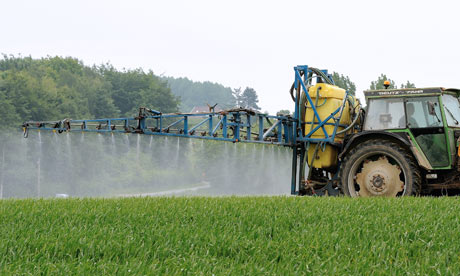
A widely used insect nerve agent that harms bees will be banned from use on corn and sunflowers in Europefrom the end of 2013, after member states overwhelmingly backed the proposal in a vote on Tuesday. However, the UK once again failed to back measures to restrict pesticide use.
Fipronil is used in more than 70 countries and on more than 100 different crops, but in May the European Food Safety Authority labelled it a "high acute risk" to honeybees. A similar assessment by the EFSA on three other neonicotinoid insecticides, based on increasing scientific evidence of harm, also preceded the suspension of their use in the European Unionin April.
Tonio Borg, European commissioner for health said: "In the aftermath of the restriction on use of neonicotinoids, I pledged to do my utmost to protect Europe's honey bee population and today's agreement with member states, not only delivers on that pledge but marks another significant step in realising the commission's overall strategy to tackling Europe's bee decline."
Bees and other pollinators are essential in the growing of three-quarters of the world's crops, but have seen serious declines in recent decades due to habitat loss, disease and pesticide use. In Tuesday's vote, only the UK, Slovakia and the Czech Republic abstained and only Spain – the biggest user of fipronil – and Romania voted against. The UK was also one of eight of the 27 EU member states that unsuccessfully opposed the EC neonicotinoid ban.
"The UK abstained from the vote as there were concerns that the proposals were not based on sound scientific evidence," said a Defra spokeswoman. "Fipronil is not used in any authorised pesticide in the UK so this ruling will have little impact [here]."
Paul de Zylva, of Friends of the Earth, welcomed the "leadership" of the European commission but added: "Yet again the UK's pesticide testing regime has proven to be unfit for purpose. It's disappointing to see the UK government abstaining from another cut and dried opportunity to protect bees."
In June, the UK government launched an "urgent" review of the crisis facing bees and other pollinators in the UK and pledged to introduce a national pollinator strategy. De Zylva said: ''The UK government must now prove its commitment to reversing bee decline. Ministers must deliver a strong national pollinator strategy by November and respond to MPs' calls for an overhaul of the nation's system for testing pesticides."
Fipronil, which is also used for cockroach and termite control, is manufactured by the German chemical company BASF. "Sound data from field studies that underpin the safe use of our product for bees were not considered sufficiently," said Jürgen Oldeweme, at BASF Crop Protection. "We are certain that Europe can achieve both – the protection of pollinators and the support of European agriculture – but for that all stakeholders must engage in a comprehensive action plan to address the real root causes of the decline in bee health."
http://www.guardian.co.uk/environment/2013/jul/16/eu-fipronil-ban-bees